


How Family Court Attorneys Help You Make Clear Decisions
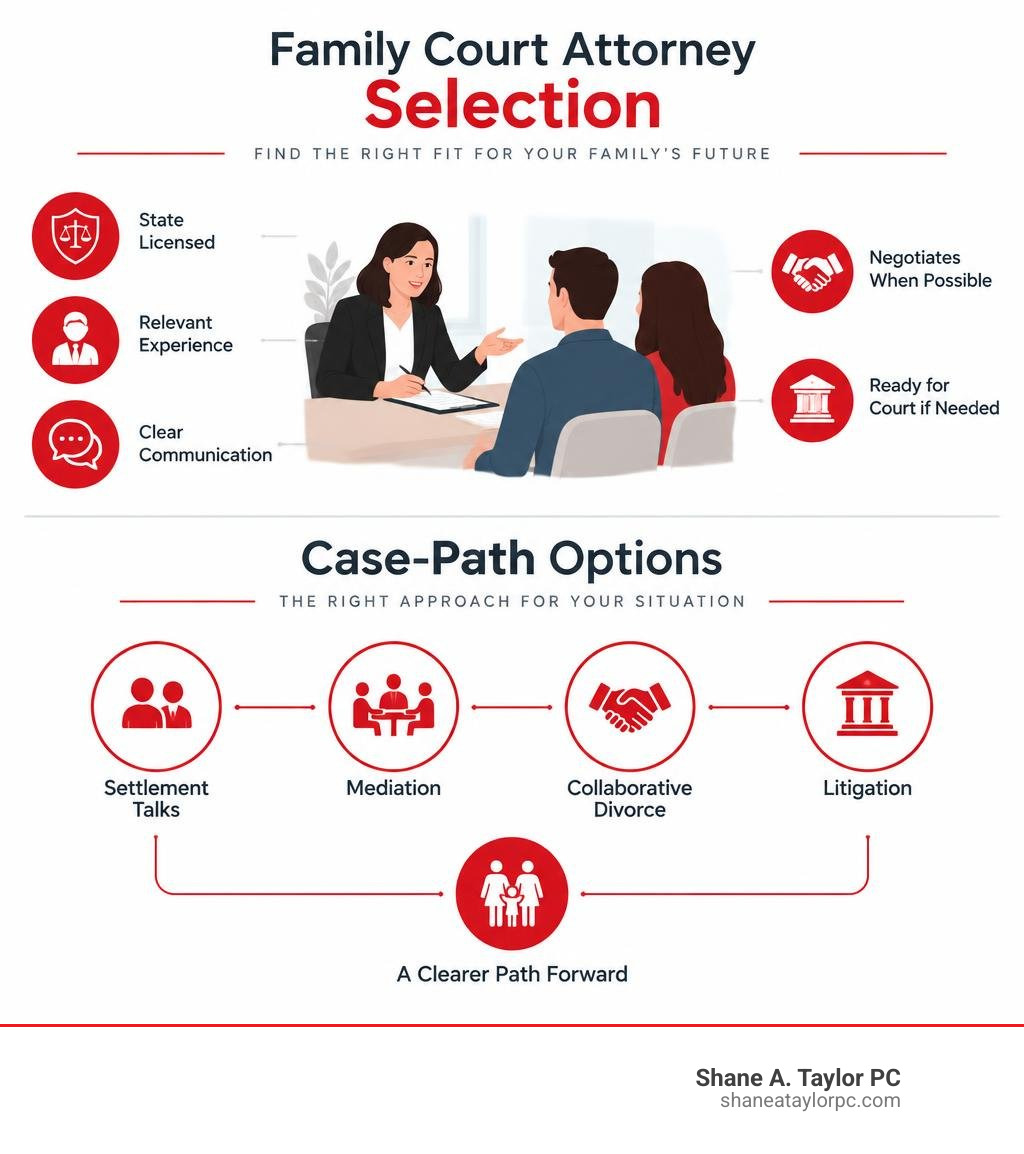
Family court attorneys help people handle divorce, custody, child support, property division, protective orders, and related family legal issues. When choosing one, look for a lawyer licensed in your state who has experience with your specific problem, explains your options in plain English, communicates reliably, and is prepared to negotiate or go to court when needed.
The right attorney does more than file paperwork. They help you organize financial records, understand deadlines, protect your parental rights, and choose the best path forward – whether that is settlement talks, mediation, collaborative divorce, or litigation. In a stressful divorce or custody case, clear advice and a practical plan can reduce uncertainty and prevent costly mistakes. According to the American Bar Association, family law matters often involve overlapping emotional, financial, and legal questions, which is why structured legal guidance is so important during these transitions.
I am Shane A. Taylor, an Alabama and Mississippi attorney with experience practicing in state and federal courts, backed by a career in military service and law enforcement. That courtroom-focused background informs my approach to helping clients evaluate family court attorneys and understand the legal process ahead.
Core Practice Areas Managed by Family Court Attorneys

Domestic legal conflicts cut straight to the core of daily life. When legal issues affect personal safety, parental relationships, and financial security, clear legal direction is essential. Family court attorneys handle a wide range of domestic legal disputes, establishing order and providing structured legal solutions during challenging life transitions.
Our team routinely assists individuals with critical domestic matters, including:
- Marital Dissolution: Navigating contested, uncontested, and complex legal splits with strategic representation from a contested divorce lawyer.
- Paternity and Parental Rights: Establishing legal fatherhood, securing legitimation, and protecting the legal rights of unmarried parents.
- Child Support and Spousal Maintenance: Ensuring equitable calculations, enforcement, and post-decree modifications.
- Adoption and Guardianship: Guiding step-parents, grandparents, and relative caregivers through formal state adoption procedures.
- Protection from Abuse (PFA): Filing urgent petitions for protective orders or defending against unfounded domestic allegations.
How Family Court Attorneys Resolve High-Conflict Custody Disputes
Custody litigation requires meticulous documentation and objective presentation. When parental conflicts escalate, family court judges focus on the best interests of the child. A qualified attorney helps parents understand legal custody (decision-making authority) and physical custody (the residential parenting schedule).
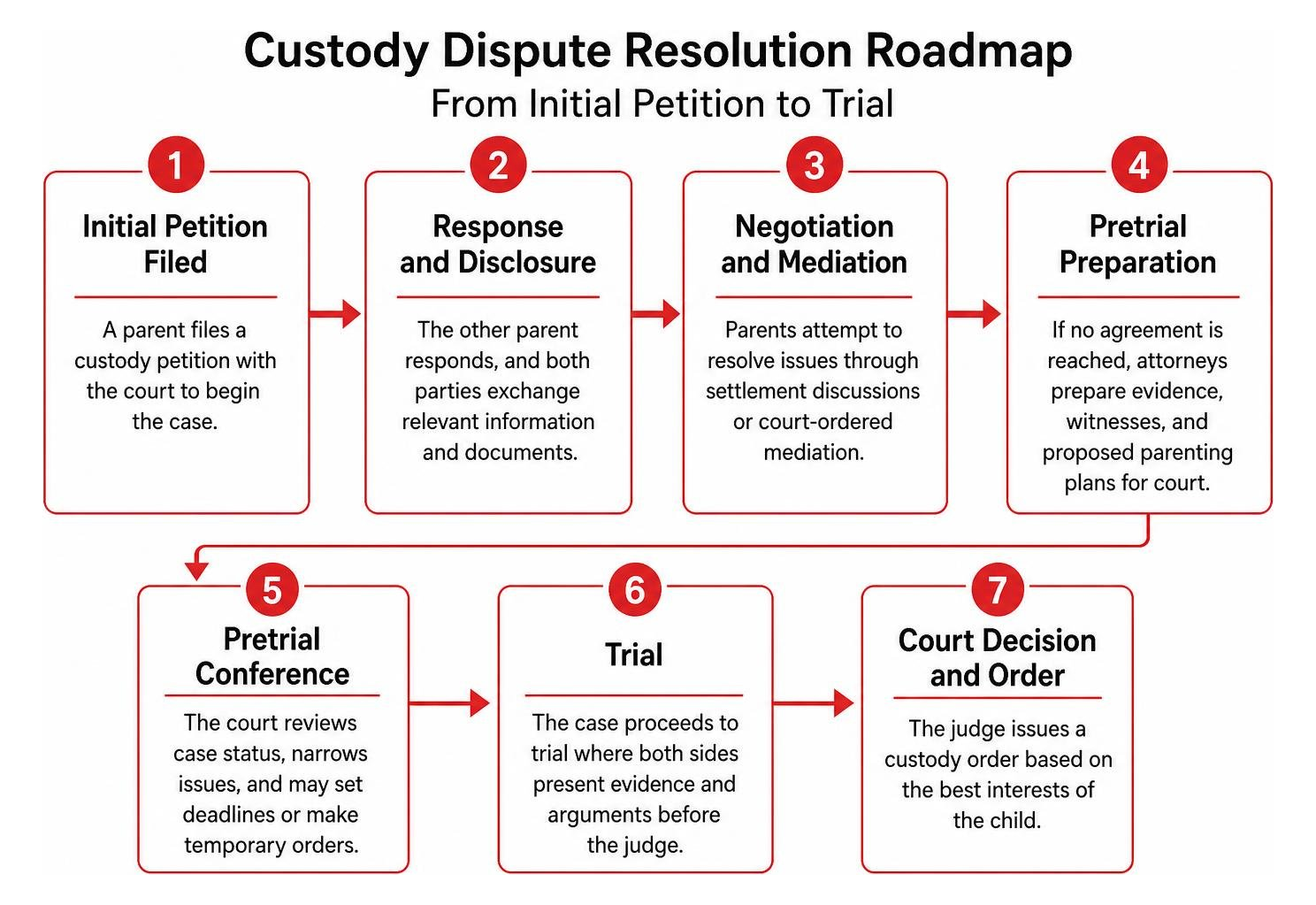
We assist parents with demystifying Alabama child custody laws by building evidence-based parenting plans. When parents face uncertainty regarding evaluating who gets custody, our firm organizes school records, witness statements, and psychological evaluations to advocate for a stable custodial arrangement. The Child Welfare Information Gateway provides additional state-specific resources that can help parents understand how courts approach custody and visitation decisions.
Prenuptial, Postnuptial, and Separation Agreements
Marital contracts define property division before disputes arise. A well-crafted prenuptial or postnuptial agreement clarifies separate property, allocates marital debts, and establishes clear alimony parameters.
For spouses seeking time apart without immediate dissolution, a formal separation agreement establishes child support, living arrangements, and property use. Exploring amicable separation flat fee divorce options provides predictable, cost-effective solutions for couples pursuing uncontested resolutions.
Dispute Resolution Pathways: Litigation vs. Alternative Dispute Resolution
Family legal matters do not follow a single formula. Selecting the appropriate dispute resolution path can conserve resources, minimize stress, and yield long-term stability. Working with an experienced advocate helps you understand how to choose a top rated divorce attorney tailored to your specific circumstances.
| Resolution Method | Key Features | Primary Benefits | Best Suited For |
|---|---|---|---|
| Divorce Mediation | A neutral mediator facilitates negotiations between spouses without issuing binding rulings. | Cost-effective, confidential, preserves working parental relationships. | Amicable couples with open financial disclosure. |
| Collaborative Divorce | Spouses and their respective counsel sign a formal agreement to settle out of court using joint financial and mental health neutrals. | Private, client-driven pace, eliminates public courtroom tension. | Complex estates with mutual dedication to cooperative negotiation. |
| Courtroom Litigation | Formal trial before a family court judge who reviews evidence and renders legally binding orders. | Finality, formal discovery powers, judicial intervention in contentious matters. | High-conflict disputes, domestic abuse, hidden assets, or intractable custody disagreements. |
Jurisdiction Breakdown: Family Court vs. General Jurisdiction Courts
Court structures vary by state and county. In many jurisdictions, dedicated Family Courts or domestic relations divisions manage custody petitions, child support enforcement, paternity adjudications, and domestic violence protection orders.
In other legal frameworks, broader trial courts—such as Circuit Courts or general jurisdiction Supreme Courts—handle divorce actions, complex property distribution, and equity matters. Knowing which venue holds jurisdiction over your case ensures timely filings and prevents costly jurisdictional dismissals. The National Center for State Courts offers an overview of how state court systems organize family and general jurisdiction dockets, which can help you understand where your case may be heard.
Navigating High-Asset Estates, Business Valuations, and Gray Divorce

High-net-worth divorces require precise financial discovery and forensic valuation. Dividing extensive marital estates involves separating non-marital property from commingled assets, valuing closely held businesses, and dividing complex retirement structures.
Our firm works alongside forensic accountants and certified valuation analysts to manage intricate marital property, securing appropriate spousal support and alimony legal counsel for our clients.
Unique Challenges in Late-Life and High-Net-Worth Marital Dissolution
Gray divorce—marital dissolution involving spouses aged 50 and older—carries distinct financial implications. Because parties have less time to rebuild retirement balances, asset division must be structured carefully.
Key considerations in late-life divorces include:
- Retirement Asset Division: Splitting pensions, 401(k) plans, and IRAs via Qualified Domestic Relations Orders (QDROs) without incurring early withdrawal penalties.
- Business Ownership and Partnership Shares: Appraising business equity, goodwill, and operating structures while safeguarding ongoing business operations.
- Executive Compensation and Stock Options: Tracing restricted stock units (RSUs), deferred compensation packages, and venture equity.
- Healthcare and Estate Restructuring: Updating beneficiary designations, trusts, and healthcare proxies post-decree.
For spouses over 50, the U.S. Department of Labor provides guidance on QDROs and retirement plan division, which can be a useful starting point before meeting with a family law attorney.
Key Criteria for Selecting the Right Legal Representation
Choosing a family lawyer requires careful evaluation of legal skill, courtroom composure, and communication standards. A strong advocate provides objective advice rather than making unrealistic promises.
Reviewing practical guidance for finding a child custody lawyer and consulting our comprehensive 2026 family law attorney guide can help streamline your search.
Essential Qualifications to Look for in Family Court Attorneys
- Extensive Trial Experience: While many cases settle, an attorney must possess substantial trial experience to advocate effectively if negotiations stall.
- Clear Fee Transparency: Look for candid discussions regarding hourly rates, retainer requirements, and flat-fee structures.
- Professional Recognition and Specialization: Evaluate peer-reviewed honors, bar association involvement, and relevant board certifications.
- Client Communication Standards: Choose a firm known for prompt, clear updates and realistic case assessments using established tips for finding a qualified divorce attorney.
Court Resources and Self-Help Information
Many circuit courts offer walk-in court help centers and standard self-representation forms for individuals handling uncontested filings. Court facilitators can provide procedural forms and explain basic filing steps.
However, court staff cannot provide legal advice, plan trial strategies, or represent you before a judge. While self-help resources work well for straightforward administrative filings, contested disputes require professional legal counsel. The American Bar Association’s Family Law Section publishes consumer resources on finding and evaluating family court attorneys, which can supplement the guidance above.
Frequently Asked Questions About Family Law Proceedings
How do family court attorneys help manage emotional conflict during a divorce?
An experienced domestic relations attorney serves as an objective legal buffer. By managing communications with opposing counsel, establishing formal boundaries, and keeping discussions centered on statutory standards, your lawyer prevents high-stress emotional reactions from compromising your case.
What is the difference between marital property division and separate property?
Separate property generally includes assets owned before marriage, individual inheritances, and gifts received exclusively by one spouse, provided these funds were not commingled.
Marital property encompasses all assets and debts acquired during the marriage, regardless of account title. Courts divide the marital estate based on statutory equitable distribution principles.
When should you transition from self-help court centers to private legal counsel?
You should retain private legal counsel immediately if your spouse hires an attorney, if hidden assets or complex investments are discovered, or if custody disputes arise. When substantial parental or financial rights are at stake, professional representation is essential.
Conclusion
Resolving domestic legal disputes requires sound strategy, calm guidance, and dedicated advocacy. Whether you are navigating a contested custody hearing, restructuring high-value assets, or negotiating an amicable settlement, the right legal representation protects your future.
At Shane A. Taylor PC, our client-focused team delivers professional, responsive representation to secure practical outcomes for families in Mobile, Alabama. If you are preparing for domestic legal proceedings, schedule a consultation with our experienced family law practice to review your options and develop a clear legal strategy.