


How to Change Attorneys During a Divorce
You can change divorce attorneys while your case is ongoing. First, check your next court date and consult a new lawyer before ending your current representation. Then notify your current lawyer in writing, request your case file and final bill, and have your new lawyer handle the required court filing. A change of lawyers does not erase existing orders or deadlines.
I’m Shane A. Taylor, an attorney who practices in Alabama and Mississippi courts. My courtroom experience shapes how I approach changing attorneys during divorce: protect the deadlines, move the file promptly, and give new counsel time to prepare.
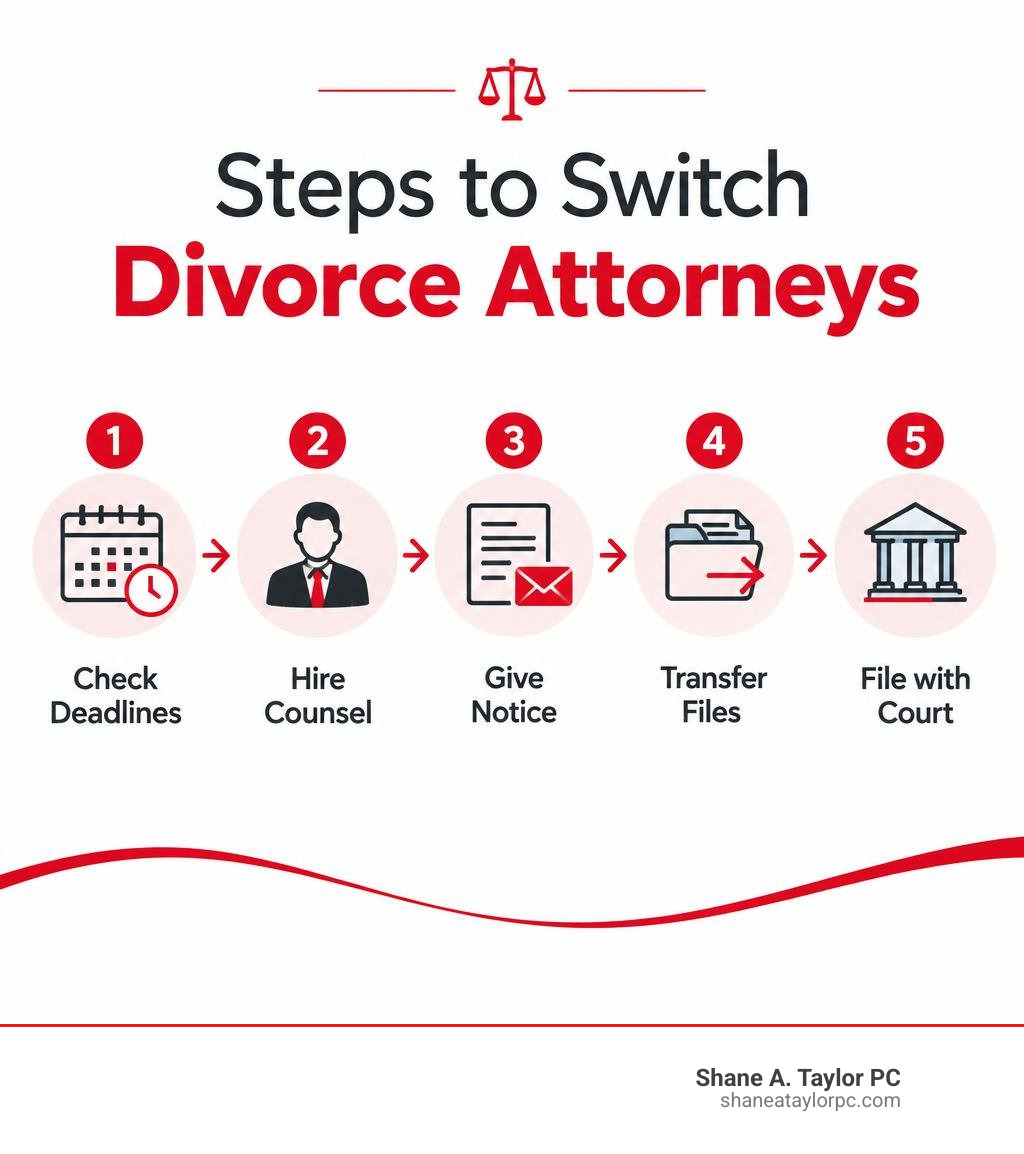
Quick changing attorneys during divorce terms:
Key Signs It Is Time to Switch Divorce Counsel

Going through a divorce is already one of life’s most challenging transitions. When you add a strained, unresponsive, or counterproductive relationship with your legal advocate, the process becomes doubly stressful. You are not alone if you feel your current representation isn’t working out: industry data shows that approximately 22% of divorce litigants change counsel before their case concludes.
Research consistently reveals that poor communication is the number one reason clients decide to switch representation. While family law matters take time to resolve, you should never feel abandoned or left in the dark by the person you hired to champion your rights. Learning when to evaluate your divorce representation is the first step toward taking control of your domestic relations case.
Warning Signs That Justify Changing Attorneys During Divorce
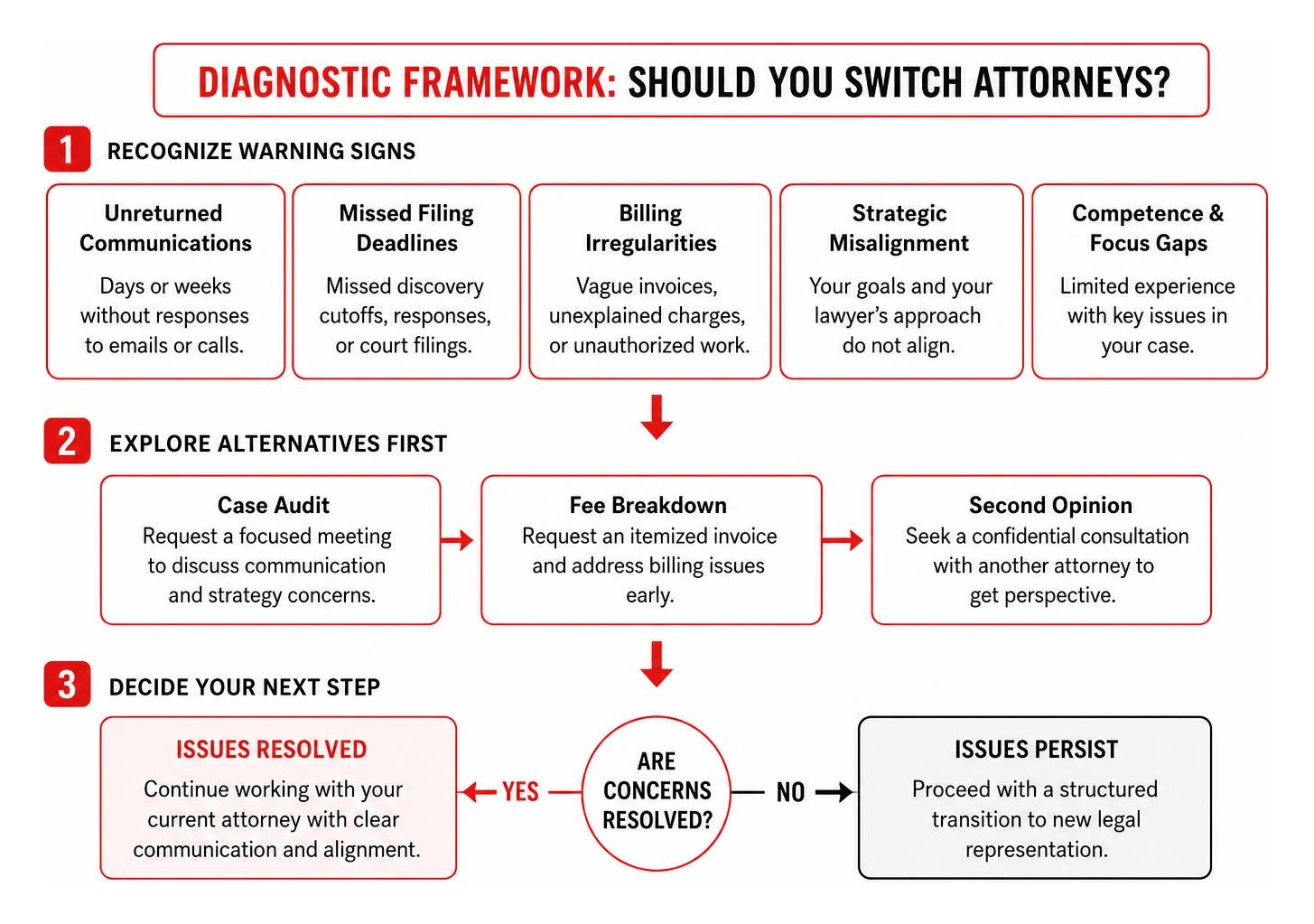
Not every minor disagreement requires firing your counsel, but several persistent issues indicate it is time to make a move:
- Unreturned communications: If days turn into weeks without responses to basic emails or phone calls, your case is not receiving the attention it requires. A standard rule of thumb is that active inquiries should be acknowledged within two to three business days.
- Missed filing deadlines: Missing discovery cutoff dates, response deadlines, or court filings can directly prejudice your position before the judge.
- Billing irregularities: Invoices with vague block billing, unexplained hourly spikes, or charges for work you never authorized are red flags that demand scrutiny.
- Strategic misalignment: Your lawyer should listen to your goals. If you want an amicable settlement but your lawyer insists on scorched-earth litigation—or if you are facing a high-conflict spouse and your counsel refuses to take assertive legal action—your strategies do not align.
- Competence and focus gaps: If your counsel seems unfamiliar with essential details, such as complex business valuations, military retirement assets, or contested custody evaluations, you may need a team with more focused experience.
Knowing what to look for in a good divorce attorney helps you identify when your current legal guidance falls short. If your marriage has turned into high-stakes litigation, working with an experienced contested divorce lawyer who remains responsive and prepared makes all the difference in achieving a fair outcome.
Exploring Alternatives Before Firing Your Lawyer
Before pulling the trigger on a substitution, beware of the sunk cost trap. Many clients stay in bad attorney relationships simply because they have already spent thousands of dollars with their current counsel. Past legal fees are spent; what matters now is protecting your future assets, parenting time, and peace of mind.
If the relationship feels rocky but salvageable, consider these intermediate steps first:
- Schedule an in-person or virtual case audit: Request a direct conference specifically focused on communication protocols and case strategy. Lay out your concerns clearly and calmly.
- Request an itemized fee breakdown: Address billing confusion early before unmanageable balances accumulate.
- Seek a formal second opinion: You can schedule a confidential consultation with another attorney without alerting your current lawyer. A second opinion helps clarify whether your lawyer’s strategy is genuinely flawed or if the delays you are experiencing are simply standard court backlogs.
Step-by-Step Process for Switching Your Legal Representation
When you determine that a change is necessary, executing a smooth, structured transition is essential to keep your case moving forward without procedural disruptions. Following proven tips for finding a qualified divorce attorney ensures your next advocate is properly equipped to handle your unique domestic issues.
Discovering how a local divorce attorney provides support will help you find a practitioner familiar with local judges, court clerks, and domestic relations procedures.
Securing New Counsel and Filing Substitution of Attorney
Under American Bar Association (ABA) Model Rule 1.16, clients maintain an unconditional right to discharge their legal counsel at any time, with or without cause. However, you should always retain your new lawyer before terminating your existing lawyer. Firing your attorney before securing a replacement leaves you temporarily self-represented (pro se), exposing you to immediate deadlines, court notices, and opponent filings without legal protection.
Once you have signed a retainer with your new attorney, the procedural steps move quickly:
- Formal written notice: Your incoming attorney or you will deliver a professional, written notice of termination to your former lawyer.
- Substitution paperwork: In domestic relations litigation, your outgoing and incoming counsel will prepare and file a formal document—typically titled a Notice of Substitution of Counsel or Motion for Substitution of Attorney—with the court clerk.
- Court approval: While clients have the right to choose their representation, judges must formally grant the substitution order if active hearings or trial settings are imminent. Retaining dedicated local legal counsel ensures all local circuit court rules and judicial requirements are strictly followed.
Transferring Case Files and Managing Retaining Liens
Your legal file belongs to you. When you change representation, your former attorney is ethically obligated to surrender your client file promptly.
- File Contents: Your file includes all filed pleadings, discovery requests and responses, financial affidavits, appraisals, correspondence, deposition transcripts, and court orders.
- Turnaround Times: In most jurisdictions, outgoing counsel is expected to transfer physical or electronic records within 30 days of the formal discharge notice.
- Retaining Liens: In some states, an attorney who is owed money may attempt to assert a “retaining lien” over client files to secure payment. However, state bar ethics rules severely restrict these liens if withholding the file would prejudice the client’s ability to defend their rights or prepare for scheduled hearings.
- Trust Accounting & Refunds: Your former lawyer must provide a final itemized statement and promptly refund any unearned portion of your initial retainer still held in their trust account.
Onboarding and Briefing Your New Lawyer Effectively
To minimize onboarding costs and get your new advocate up to speed quickly, take an active role in organizing your case materials. The more organized you are, the less time your new attorney spends sorting through unindexed paperwork.
Provide your new counsel with:
- A clear, bulleted chronological timeline of your marriage, separation, and legal proceedings.
- A summary of all temporary orders currently in effect (child support, temporary custody, exclusive use of the marital home).
- A checklist of immediate pending deadlines, including scheduled mediations, depositions, or hearings.
- Complete financial disclosure files, including bank statements, tax returns, pay stubs, and retirement valuations.
When children are involved, you must also provide school calendars, custody journals, and relevant communications to ensure your attorney can take immediate steps toward protecting parenting rights and custody.
The Legal and Financial Realities of Changing Attorneys During Divorce

Switching attorneys mid-stream involves practical legal and financial considerations. While hiring the right counsel often saves money in the long run by preventing costly settlement errors, you should prepare for the immediate transition costs:
- Final billing reconciliation: You must settle valid, earned fees with your previous attorney.
- New retainer deposit: Your new firm will require an initial retainer to begin work on your file.
- File review time: Your incoming lawyer must bill time to read the existing case records, analyze discovery, and review past transcripts to build an effective legal strategy.
These initial costs are often essential investments, particularly when long-term issues like property division or spousal support and alimony are at stake. A single favorable adjustment to an ongoing support obligation can easily outweigh short-term transition fees.
Strategic Risks and Case Timing Near Hearings or Trial
Timing is critical when deciding to switch counsel. While changing representation early in the discovery phase creates minimal disruption, switching weeks before a scheduled trial date introduces strategic hurdles.
| Case Stage | Feasibility of Switching | Primary Considerations |
|---|---|---|
| Pleadings & Early Discovery | High | Low impact; new counsel has full runway to shape discovery strategy. |
| Mediation & Settlement Phase | Moderate | Gives fresh perspective; ensures you don’t settle under pressure. |
| Within 30 Days of Trial | Complex | Requires court permission; new counsel must seek a continuance. |
If you switch counsel immediately prior to trial, your new attorney will file a Motion for Continuance requesting the judge to postpone the trial date so they can prepare. While judges frequently grant a first continuance to accommodate new counsel, they have full discretion to deny the request if they believe the change is a delay tactic.
Frequently Asked Questions About Changing Divorce Lawyers
Will changing my attorney delay my divorce proceedings?
A transition may cause a brief administrative pause of 30 to 60 days while files are transferred and new counsel completes their review. If a court continuance is granted, it can push a hearing date back on the judicial calendar. However, this modest delay is often preferable to walking into a courtroom with an unprepared or disengaged lawyer.
Can my previous lawyer refuse to release my file if I owe money?
Generally, no. While fee disputes must be resolved through accounting or fee dispute resolution, state professional ethics rules prohibit attorneys from holding client files hostage if doing so harms the client’s legal interests. Outgoing counsel must provide your pleadings, discovery, and client-supplied documents to your new attorney.
How do I tell my current lawyer that I am hiring someone else?
You do not need to engage in an uncomfortable argument. A polite, formal written notice sent via email or certified mail is standard practice. Keep it brief and professional: state that you are terminating representation, request an itemized final bill with a refund of unearned trust funds, and instruct them on where to deliver your case file. Your new counsel can provide a standard template for this notice.
Conclusion
You always hold the legal right to choose who represents you in court. If your current attorney is unresponsive, unprepared, or failing to protect your interests, you do not have to remain trapped in an unproductive professional relationship. By securing capable counsel first, requesting your records promptly, and managing your case calendar, you can take control of your divorce proceedings and move forward with confidence.
At Shane A. Taylor PC, we provide clear, responsive, and dedicated representation for clients navigating family law challenges across Southwest Alabama. If you need a fresh start or experienced guidance, contact us today for family law support tailored to your goals.