


How to Choose a Lawyer for Your Custody Case
Start with three checks: Confirm the lawyer’s state bar status, ask about their experience with cases like yours, and request a clear explanation of fees. If your case involves safety concerns, high conflict, or a possible move, ask how they would handle those issues before you hire them.
A good first meeting should leave you with a clearer view of your options, the evidence you need, and what may happen next. You do not need a promise of victory. You need a lawyer who listens, explains the risks, and has a plan centered on your child’s well-being.
I’m Shane A. Taylor, an Alabama attorney with more than 10 years of police experience and a background in trial advocacy. That experience shapes how I explain the evidence and courtroom skills to look for in lawyers for custody cases.

Lawyers for custody cases basics:
Why Hiring the Right Lawyers for Custody Cases Matters
Custody disputes represent some of the most emotionally charged legal battles an individual will ever face. When you step into a courtroom, you are not merely arguing over schedules—you are asking a judge to make life-altering decisions regarding your child’s emotional development, physical safety, and daily upbringing. Having effective legal representation ensures that your voice is heard and that your child’s best interests remain at the absolute center of every proceeding.
A strategic advocate provides more than simple document preparation. They build an evidentiary foundation proving parental fitness, handle challenging cross-examinations, and counter misleading claims from opposing counsel. When you work with an experienced team, you benefit from a structured guide to finding a qualified child custody lawyer who can navigate the procedural nuances of family law courts while protecting your constitutional parental rights.
Essential Qualifications and Certifications to Look For
Not every legal practitioner is equipped to manage contested family disputes. When evaluating potential advocates, review their primary credentials and standing within the state bar:
- Dedicated Family Law Focus: Family law evolves rapidly through statutory updates and appellate precedents. Practitioners who dedicate the majority of their practice to domestic relations understand the judicial temperament of local courtrooms.
- Demonstrated Trial and Courtroom Experience: While settlement is often preferred, your legal team must be fully prepared to present evidence at trial if negotiations break down.
- Professional Recognition and Standing: Look for attorneys with strong ratings, professional affiliations, and active standing with state bar associations.
- Ethical Standards and Transparent Practices: Honest counsel provides realistic assessments rather than promising guaranteed outcomes.
For a deeper look into the standards that define premier representation, explore our comprehensive family law attorney guide.
Evaluating Boutique Practices vs. Large Family Law Firms
Choosing between a specialized boutique firm and a large multi-practice firm is a key decision in your custody case. Both models offer specific benefits, but boutique firms frequently provide the personalized, responsive attention that high-stakes child custody matters demand.
| Feature / Factor | Boutique Family Law Practice | Large Multi-Practice Law Firm |
|---|---|---|
| Caseload Volume | Lower, selective caseloads allowing dedicated focus | Higher caseloads across multiple departments |
| Client Interaction | Direct, frequent contact with lead attorneys | Communication often filtered through layers of staff |
| Strategy Customization | Tailored approaches designed around specific family needs | Standardized procedures and generalized litigation templates |
| Billing Transparency | Direct fee structures and focused resource allocation | Complex departmental billing and higher administrative overhead |
| Courtroom Presence | Deep familiarity with local judges and family court staff | Broader regional reach but less daily local focus |
Dispute Resolution Pathways: Litigation, Mediation, and Collaborative Law
Resolving a custody matter does not follow a single formula. Depending on parental cooperation, emotional dynamics, and safety considerations, cases proceed along different paths: litigation, mediation, or collaborative law.
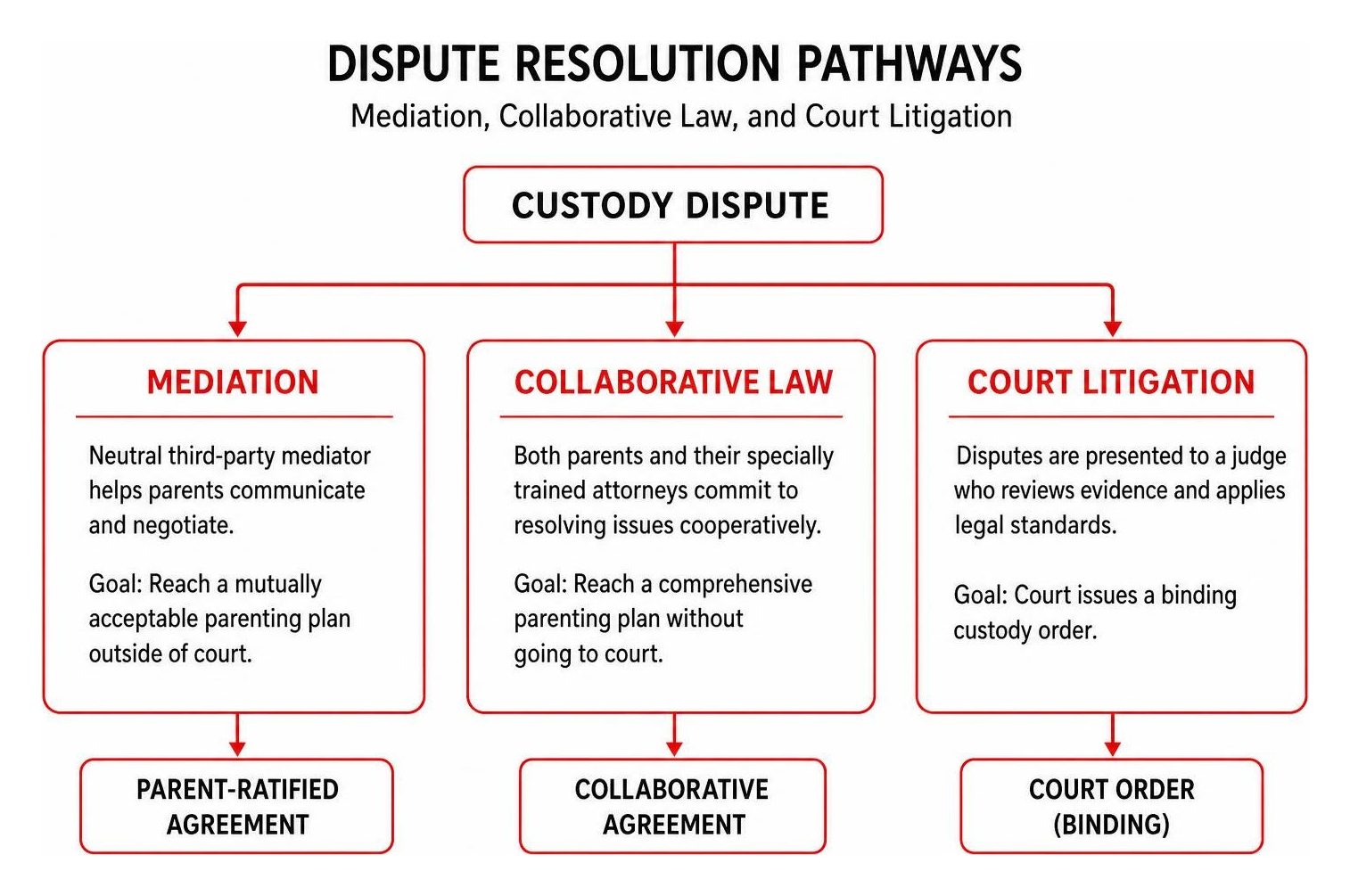
Under established legal principles, courts evaluate all dispute resolutions against prevailing child custody legal standards to verify that agreements serve the child’s emotional, educational, and physical well-being.
How Lawyers for Custody Cases Manage High-Conflict Litigation and Alienation
In high-conflict matters, emotional friction can escalate into destructive behaviors, including parental alienation—where one parent actively attempts to damage the child’s relationship with the other. Handling these volatile dynamics requires aggressive evidence collection and formal trial readiness.
When facing bad-faith tactics or alienation, skilled legal counsel will:
- File Emergency Motions: Secure protective measures or temporary orders to maintain existing parent-child bonds and enforce parenting schedules.
- Gather Forensic Documentation: Subpoena communication records, school logs, and digital correspondence showing interference.
- Engage Forensic Evaluators: Request independent custody evaluations to uncover psychological manipulation.
- Enforce Court Orders: Hold uncooperative parties accountable through contempt proceedings.
Understanding these dynamics is vital when evaluating who gets custody during contested trials.
Resolving Disputes Outside Court Through Mediation and Collaborative Divorce
When parents communicate effectively, out-of-court dispute resolution offers a faster, less contentious, and more economical alternative to courtroom litigation.
- Mediation: A neutral third-party mediator helps parents negotiate parenting time, holiday schedules, and decision-making authority without imposing a binding ruling.
- Collaborative Practice: Both parties retain collaborative lawyers and pledge in writing to resolve issues outside of court. If negotiations reach an impasse, both attorneys must withdraw, incentivizing all parties to reach an agreement.
These alternatives foster cooperative co-parenting relationships and keep sensitive family matters out of public records.
Complex Child Welfare Dynamics and Special Legal Circumstances

Certain custody matters require immediate intervention due to risks to a child’s health, safety, or stability. In these situations, legal strategy focuses on rapid documentation, strict evidence standards, and child-centered protective protocols designed around protecting parental rights and child welfare.
Navigating Domestic Violence, Mental Health, and Substance Abuse Allegations
When domestic violence, active substance abuse, or severe unmanaged mental health concerns are present, family courts prioritize safety above standard visitation schedules. Counsel must quickly gather credible evidence to substantiate or refute these claims.
Lawyers utilize specific statutory mechanisms to manage these risks:
- Restraining Orders and Orders of Protection: Emergency legal filings designed to prevent dangerous contact, structured under standard protective orders and custody procedures.
- Monitored or Supervised Visitation: Structured visitation environments requiring qualified professional supervision to protect children while maintaining parental ties.
- Court-Ordered Testing: Comprehensive drug and alcohol screenings to verify parental sobriety.
- Psychological Evaluations: Formal clinical assessments performed by court-approved forensic psychologists.
The Critical Role of Guardians ad Litem and Custody Evaluators
In highly contested matters, judges often appoint a Guardian ad Litem (GAL) or a professional custody evaluator to act as an independent representative for the child. The GAL does not represent either parent; their sole mandate is investigating the family dynamic to advocate for the child’s best interests.
A Guardian ad Litem typically performs the following duties:
- Conducts detailed interviews with both parents and the child.
- Performs unannounced and scheduled home visits.
- Contacts collateral references, such as teachers, therapists, pediatricians, and family friends.
- Prepares a formal written report and delivers custody recommendations to the court.
Handling Interstate Relocation and Hague Convention Disputes
Geographic moves introduce complex jurisdictional hurdles. When a custodial parent plans an interstate move—or when cross-border travel occurs without consent—cases fall under strict statutory frameworks.
- Interstate Relocation (UCCJEA): The Uniform Child Custody Jurisdiction and Enforcement Act establishes which state court holds authority over initial decrees and post-judgment modifications. Clear guidance is available via official resources on court custody navigation.
- International Custody and Hague Convention: In cases where a parent relocates a child abroad without authorization, international treaties—specifically the Hague Convention on the Civil Aspects of International Child Abduction—govern prompt return proceedings, requiring precise legal coordination.
Strategic Case Preparation: Documentation and Financial Coordination
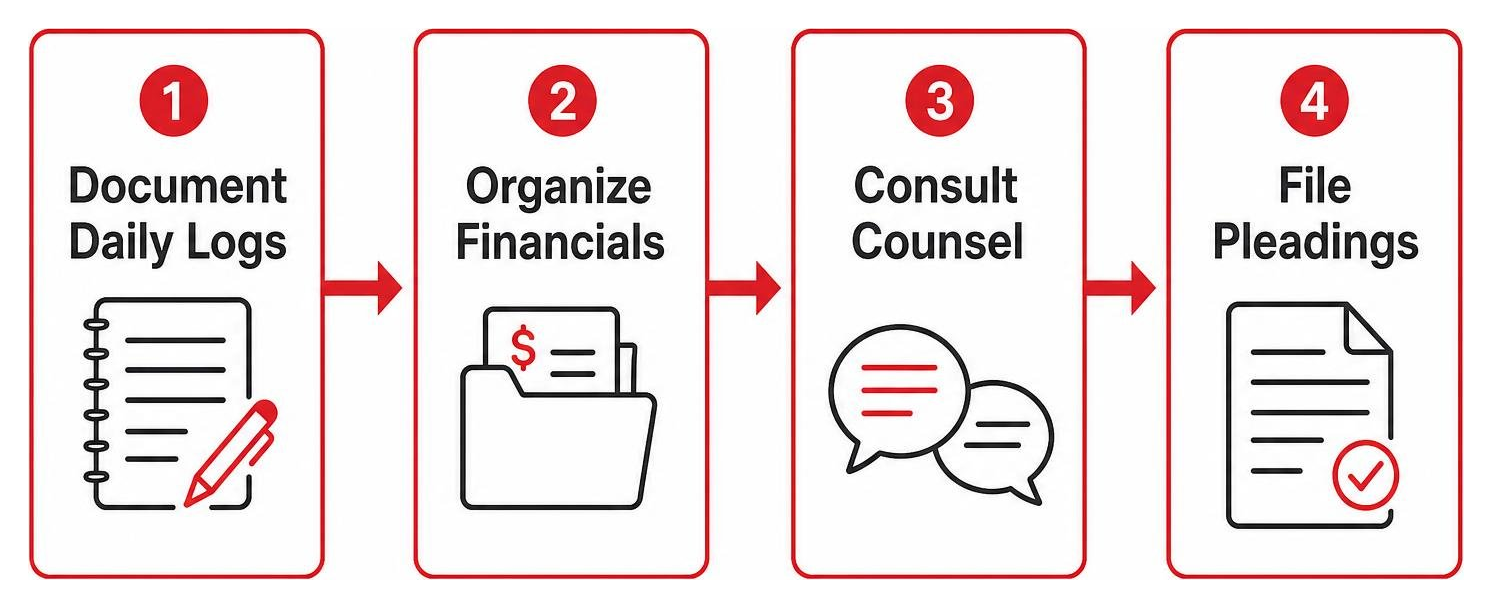
Thorough documentation is the cornerstone of every successful custody case. Maintaining accurate records clarifies daily parenting realities for judges and evaluators, particularly when establishing the legal rights of unmarried parents.
How Lawyers for Custody Cases Prepare for Consultations and Review Credentials
An initial consultation establishes your case strategy. Parents should approach this meeting ready to share key facts and assess the lawyer’s qualifications, peer recognition, and case background.
During your meeting, prepare to review:
- Current Care Schedules: Detailed records of who handles daily routines, appointments, schooling, and extracurricular activities.
- Written Communications: Text messages, emails, and parent-portal logs showing communication patterns.
- Prior Court Filings: Any existing agreements, child support decrees, or legal filings.
For more preparation tips, review our guide on choosing a divorce and custody attorney.
Integrating Complex Financial Issues and Child Support
Custody decisions and financial matters are closely connected. Parenting time distributions directly affect child support obligations, health insurance allocations, and tax dependency exemptions.

When cases involve significant assets, private business interests, or variable compensation structures, legal teams coordinate with forensic accountants. This ensures fair financial disclosures and accurate child support determinations without shortchanging the child’s daily care needs.
Frequently Asked Questions About Custody Representation
What should I bring to my initial child custody consultation?
Bring all existing court orders, recent tax returns, proof of income, a chronological log of parenting responsibilities, relevant digital communications, school and medical records, and a list of key witnesses.
How do courts determine the best interests of the child?
Judges assess multiple statutory factors, including:
- The child’s safety, emotional needs, and physical well-being.
- The home stability provided by each parent.
- Existing emotional bonds between parent and child.
- Each parent’s willingness to support a positive relationship with the other parent.
- Any documented history of abuse, neglect, or substance dependency.
What is the difference between legal custody and physical custody?
Legal custody involves decision-making authority over significant life matters, including education, healthcare, and religious upbringing. Physical custody defines where the child resides and the specific parenting time schedule each parent maintains. Both forms of custody can be awarded jointly or solely to one parent.
Conclusion
Custody disputes demand sound legal strategy, attention to evidentiary detail, and a focus on your child’s long-term well-being. Securing dedicated representation ensures your rights are protected throughout negotiations and courtroom hearings.
At Shane A. Taylor PC, we provide strategic, client-centered advocacy tailored to your family’s unique circumstances. Contact our office today for experienced family law representation to protect your family’s future.