


When Faith and Family Law Intersect: Finding the Right Attorney for Your Case
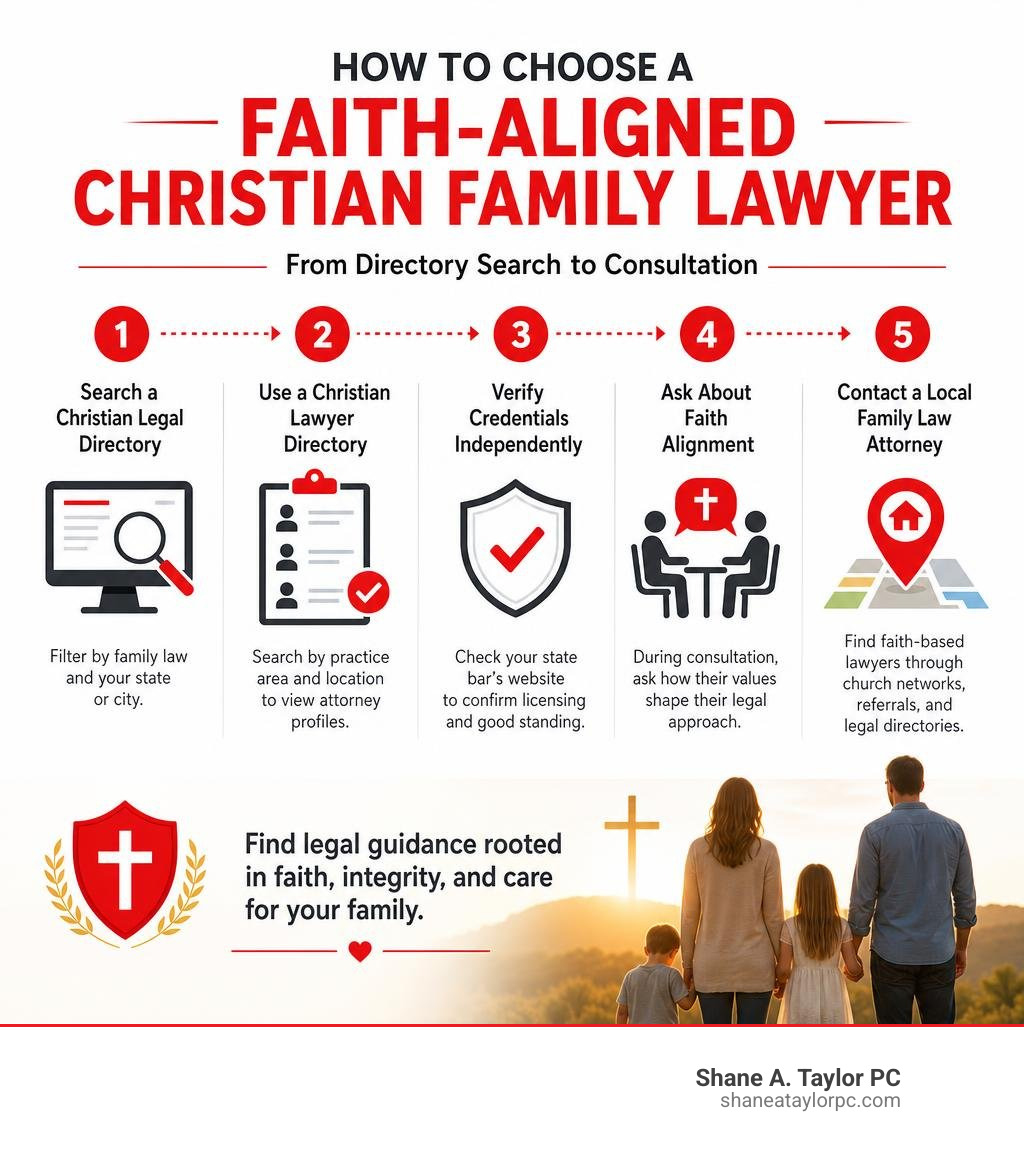
If you need Christian family lawyers near me, here is how to find one quickly:
- Search the Christian Legal Society directory — filter by family law and your state or city.
- Use the Christian Lawyer Directory — search by practice area and location to view attorney profiles.
- Verify credentials independently — check your state bar’s website to confirm the attorney is licensed and in good standing.
- Ask about faith alignment — during a consultation, ask directly how their values shape their legal approach.
- Contact a local family law attorney — many faith-based lawyers are findable through local church networks, referrals, and legal directories.
Divorce and custody cases are among the most painful experiences a family can go through. The legal system is complex. The emotional weight is real. And for many people of faith, there is an added layer — they want legal help that does not conflict with their values.
That is exactly why so many parents and spouses search for a Christian family attorney. Not just someone who is technically skilled, but someone whose worldview aligns with theirs. Someone who brings honesty, empathy, and integrity to every conversation — not just legal jargon and billing hours.
As one faith-based legal directory puts it, working with a lawyer who shares your faith provides greater peace of mind during some of life’s most difficult moments. That sentiment resonates with a lot of families sitting across the table from a lawyer for the first time, unsure who to trust.
I’m Shane A. Taylor — a former U.S. Army soldier and Birmingham Police Department officer with over a decade of law enforcement experience before earning my law degree from Cumberland School of Law. My background in public service and criminal justice shapes how I approach Christian family lawyers near me searches for Alabama families who want representation rooted in integrity and clear, honest communication. In this guide, I’ll walk you through everything you need to know to find the right faith-aligned family attorney for your situation.
How Christian Family Lawyers Integrate Faith and Ethics Into Legal Representation
When you hire a Christian family lawyer, you are working with an advocate who views the practice of law as a calling grounded in personal ethics, personal integrity, and a commitment to serving others. For Christian attorneys, legal ethics are not merely administrative rules enforced by the state bar — they are a reflection of deeply held biblical ethics, such as dealing honestly with opposing parties, standing up for justice, and walking alongside clients with genuine empathy and humility.
Integrating faith into legal strategy does not mean turning courtrooms into pulpits. Rather, it shapes how a lawyer treats you as a human being during a moment of intense strain. In domestic relations matters, emotions run high. It can be tempting for attorneys to inflame arguments, encourage petty disputes, or drag out litigation just to rack up billable hours. A attorney committed to faith-based integrity rejects those tactics. We prioritize transparent counsel, helping you maintain a clear conscience throughout the process so you can look back on your legal decisions with confidence.
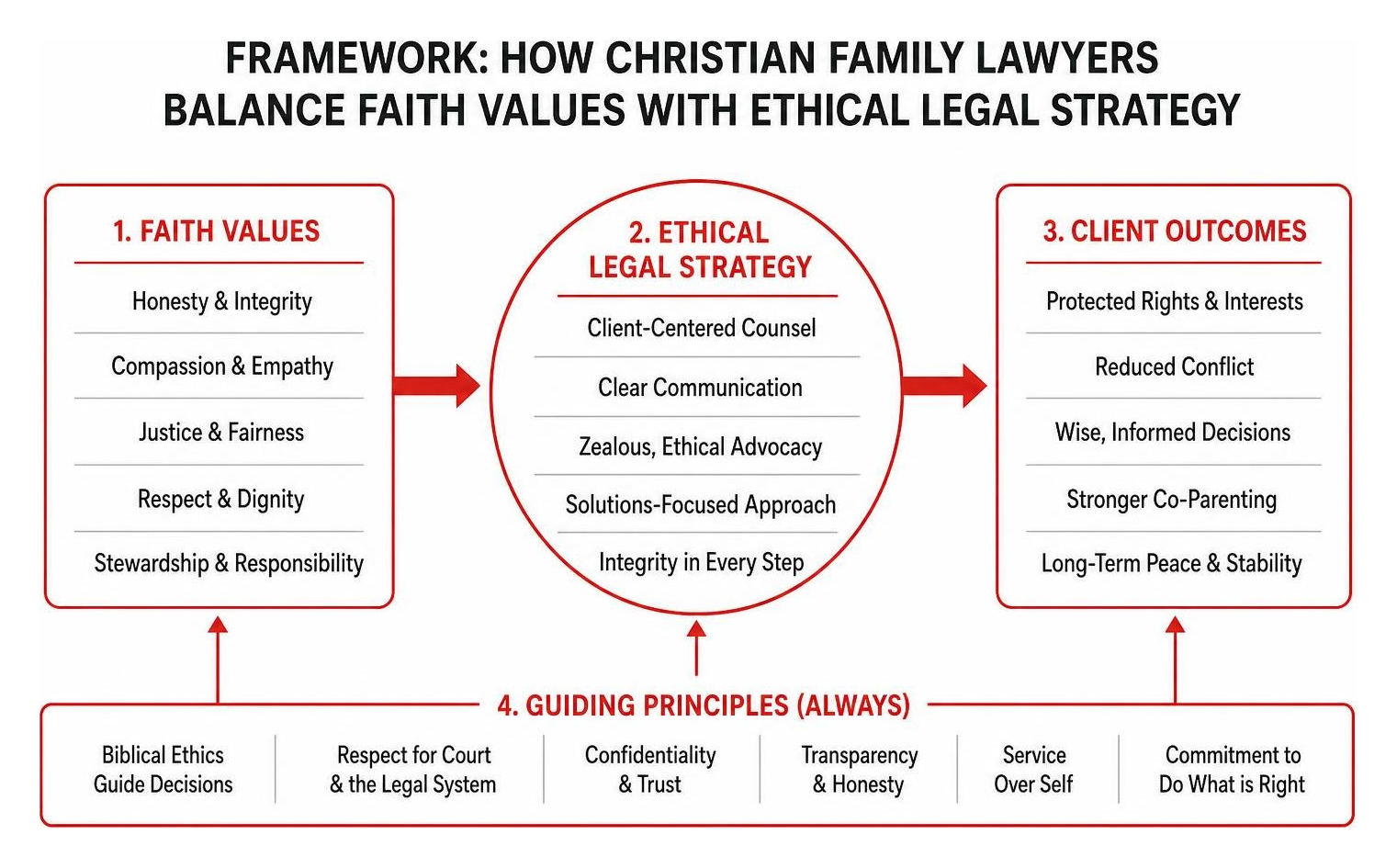
When reviewing What to Look for in a Good Divorce Attorney, you should seek a legal team that combines rigorous legal skill with steady, compassionate guidance. Faith-aligned attorneys work to protect your parental and financial rights, while encouraging solutions that promote long-term family stability and peace whenever possible.
Serving Clients of All Faiths and Backgrounds
A common misconception is that Christian family law firms only represent clients of the same faith background. In reality, ethical Christian law practices welcome and advocate for individuals from all walks of life, regardless of their religious beliefs or background.
Faith-based practice principles are built on the foundational concept of universal dignity — treating every individual with respect, non-judgmental counsel, and undivided loyalty. Whether a client is a devout Christian, adheres to another faith, or claims no religious affiliation at all, our commitment to equal advocacy and constitutional protection remains identical. Protecting your constitutional rights, securing your marital assets, and safeguarding your children are legal duties rooted in professional excellence and fundamental fairness.
Key Types of Family Law Cases Handled by Faith-Based Attorneys

Family law encompasses every phase of domestic relations, from happy milestones like adoption to emotional transitions like legal separation and divorce. Faith-based attorneys bring a steady hand to these complex proceedings, ensuring that legal rights are asserted while minimizing unnecessary family trauma.
Marriage Dissolution and Asset Division
Navigating the end of a marriage requires both legal precision and emotional maturity. Under Alabama family law, spouses can seek a divorce on fault grounds or under no-fault grounds, such as an irretrievable breakdown of the marriage. Regardless of the grounds, property division remains one of the most critical aspects of dissolution.
Unlike community property states where marital assets are divided strictly 50/50, Alabama follows equitable distribution rules. Courts divide marital property, debt, and assets based on what is fair under the specific circumstances of the marriage. Separate property — such as assets owned prior to marriage, or individual gifts and inheritances held separately — generally remains with the original owner if kept separate.
Faith-aligned attorneys help clients navigate asset division, debt allocation, and prenuptial agreements with absolute honesty, helping ensure hidden assets are uncovered and marital financial contributions are properly valued. If alimony or spousal maintenance is appropriate to prevent economic hardship, securing expert Spousal Support Guidance helps ensure a fair transition for both spouses.
Child Custody and Parental Rights
Nothing matters more in family court than protecting children. When parents separate, establishing custody arrangements that serve the child’s emotional, spiritual, and physical development is paramount.
When Demystifying Alabama Child Custody Laws, courts base decisions entirely on the best interest of the child. Judges examine factors such as:
- The emotional bond between each parent and the child
- Each parent’s capacity to provide a stable, loving environment
- The child’s educational, medical, and social needs
- Cooperation between parents regarding major health, religious, and educational decisions
Faith-focused attorneys prioritize child welfare above parental ego. Whether establishing clear visitation schedules, drafting comprehensive parenting plans, or standing up for Unmarried Parents Legal Rights, we focus on legal strategies that shield children from conflict and empower loving parents to remain actively involved in their lives.
Finding Qualified Christian Family Lawyers Near Me Using Directories and Resources
Locating an experienced attorney who aligns with your core values requires searching beyond basic search engine ads. Fortunately, dedicated organizations and legal directories exist to make your search for christian family lawyers near me far simpler.
The Find a Christian Attorney Directory hosted by the Christian Legal Society (CLS) is one of the most recognized national portals. Lawyers listed in the CLS directory are regular members who have signed the organization’s Statement of Faith. However, it is essential to remember that directories function as self-reported listing tools. The Christian Legal Society does not independently verify the personal qualifications, trial experience, or practice area expertise of listed members.
Therefore, directory listings should serve as your starting point, not your final check. You must pair directory lookups with regional legal directories and state resources, such as looking for local counsel through resources like Find Local Family Law Attorneys Near Me.
Steps to Locate Top-Rated Christian Family Lawyers Near Me
To ensure you are hiring an legal advocate who possesses both strong ethics and genuine courtroom competence, follow these practical steps:
- Search National & Faith Directories: Start by searching the CLS directory or Christian Lawyer Directory filtered by your city or state and practice focus (Family Law, Divorce, Custody).
- Verify State Bar Standing: Visit the Alabama State Bar (or your state’s licensing authority) website to verify that the lawyer is actively licensed, in good standing, and free of formal disciplinary actions.
- Check Regional Directories: Review local state resources, such as the Limestone County Family Lawyers Directory or Mobile County court directories, to cross-reference practice history.
- Read Client Reviews & Peer Recognition: Look for authentic client testimonials and industry recognitions, such as Super Lawyers distinctions or high client satisfaction ratings, which reflect peer respect and legal experience.
- Schedule an Initial Consultation: Call the law firm directly to evaluate their responsiveness, professionalism, and willingness to discuss how faith and legal strategy intersect.
Key Questions to Ask When Consulting Christian Family Lawyers Near Me
When meeting with a prospective lawyer, treat the meeting as an interview. Using 7 Tips for Finding a Qualified Divorce Attorney as a guide, bring a list of targeted questions to assess their technical experience and personal approach:
- Legal Experience: “How many years have you practiced family law in our local county courts, and what percentage of your practice is dedicated to contested custody or divorce cases?”
- Faith Integration: “How do your personal faith and values inform your daily legal practice and overall negotiation strategy?”
- Communication Style: “Will you personally handle my court appearances, or will my case be handed off to an associate paralegal?”
- Strategy & Conflict Resolution: “What is your approach when dealing with a highly unreasonable opposing party or high-conflict legal scenario?”
- Fee Disclosures: “What is your hourly rate, retainer requirement, and estimated total financial investment for a case like mine?”
Balancing Compassion and Aggressive Representation in High-Conflict Family Law

A common myth is that an attorney who operates with Christian values must be weak, passive, or overly eager to compromise at any cost. In reality, true Christian advocacy requires balancing deep personal compassion for the client with aggressive, uncompromising representation in the courtroom.
Compassion and aggressive representation are not opposites — they work together. Being compassionate means caring deeply enough about a family’s future to prepare every case meticulously for trial. Being aggressive means standing firm against intimidation, uncovering hidden assets, exposing false allegations, and relentlessly protecting child safety under state law.
Lawyers who combine trial readiness with strategic negotiation achieve superior leverage. When opposing counsel knows your legal team is fully prepared to try a case before a judge, they are far more likely to negotiate reasonably out of court.
Navigating Sensitive Issues Like Parental Alienation
In high-conflict custody battles, some of the most damaging scenarios involve parental alienation — where one parent deliberately manipulates a child to turn them against the other parent. Handling these complex dynamics requires exceptional legal skill, emotional restraint, and swift strategic action.
Faith-aligned attorneys tackle parental alienation with clear, evidence-based methods rather than emotional retaliatory attacks:
By documenting interference early and leveraging neutral psychological experts, attorneys establish a clear factual record for the court. This approach protects children from ongoing psychological distress while preserving vital parental bonds.
Understanding Consultations, Legal Fees, and Pro Bono Assistance
Understanding the financial commitment required for legal representation prevents unnecessary stress. Private family law practices, faith-based law firms, and legal aid clinics operate under distinct financial models depending on client needs and income levels.
| Legal Service Option | Fee Structure | Consultation Type | Best Suited For |
|---|---|---|---|
| Private Faith-Aligned Law Firm | Hourly retainer or flat fee based on complexity | Comprehensive initial consultation | Contested/uncontested divorce, high-asset division, complex custody disputes |
| Christian Legal Aid Clinics | Free / Pro Bono for qualifying low-income individuals | Free brief intake screening | Low-income individuals, emergency legal aid, basic family filings |
| Court-Appointed / Volunteer Lawyers | Reduced fee or state-funded | Assigned by court panel | Income-qualified individuals facing specific court mandates |
For individuals facing extreme financial hardship, national organizations like the Christian Legal Society maintain a separate Christian Legal Aid Clinic Directory specifically listing volunteer pro bono programs. Private law practices charge standard professional fees to maintain dedicated legal staff, expert witnesses, and trial resources needed to fight complex domestic cases.
Frequently Asked Questions
What should I look for when choosing a Christian family lawyer near me?
Look for an attorney who demonstrates an active balance of legal competence and faith-aligned integrity. Key indicators include extensive trial experience in local family courts, state bar standing in good standing, clear fee disclosures, positive client feedback, and a firm commitment to client dignity and honest communication.
Do Christian family lawyers offer free consultations or pro bono services?
Private Christian family lawyers charge professional fee structures ( hourly retainers or project fees) to maintain dedicated legal operations. However, low-income individuals seeking pro bono (free) legal assistance can search the Christian Legal Aid Clinic Directory to connect with volunteer clinics providing free help to qualifying individuals.
How do Christian family lawyers balance faith with aggressive legal representation?
Faith-aligned lawyers view aggressive legal representation as a duty to protect client rights, truth, and child welfare. Balancing faith and courtroom strength means refusing dishonest tactics while forcefully presenting facts, challenging opposing witnesses, and advocating tirelessly before judges to secure justice.
Conclusion
Navigating a family law challenge is rarely easy, but you do not have to walk through it alone or sacrifice your personal values to get top-tier legal advocacy. Finding an attorney who understands both state statutes and your desire for ethical guidance brings immense legal peace of mind during turbulent times.
At Shane A. Taylor PC, our legal team brings decades of public service, military discipline, law enforcement rigor, and family law trial experience to every client we represent. We believe in providing clear answers, aggressive courtroom protection, and compassionate, client-focused counsel every step of the way.
If you are facing a divorce, custody dispute, or domestic relations matter in Mobile, Alabama, or surrounding areas, reach out to explore our comprehensive Family Law Representation Services today. Let us help you protect your family’s rights and secure a brighter future.