


When You Need Lawyers for Custody Cases Near Me: What to Know First
Finding lawyers for custody cases near me is one of the most important steps you can take when your family’s future is on the line. Custody disputes are emotionally exhausting, legally complex, and the stakes — your relationship with your child — could not be higher.
Here’s what to look for in a local custody lawyer, fast:
| What Matters | Why It Matters |
|---|---|
| Family law experience | Custody law varies by state and even by local judge |
| Local court knowledge | Familiarity with local courts and judges shapes strategy |
| Clear communication | You need honest answers, not legal jargon |
| Transparent fees | Know what you’re paying before signing anything |
| Board certification or peer recognition | Signals a higher standard of professional achievement |
The good news: you have real options, from private attorneys who can represent you in court to free family court help centers that can walk you through forms. The key is knowing which option fits your situation — and acting before a judge makes decisions for you.
I’m Shane A. Taylor, a Mobile, Alabama attorney and former police officer with over a decade of law enforcement experience, and I’ve built my practice around helping parents like you navigate Alabama’s family courts as one of the lawyers for custody cases near me that families in this region turn to. My background means I understand both the legal system and the human stakes behind every custody case.
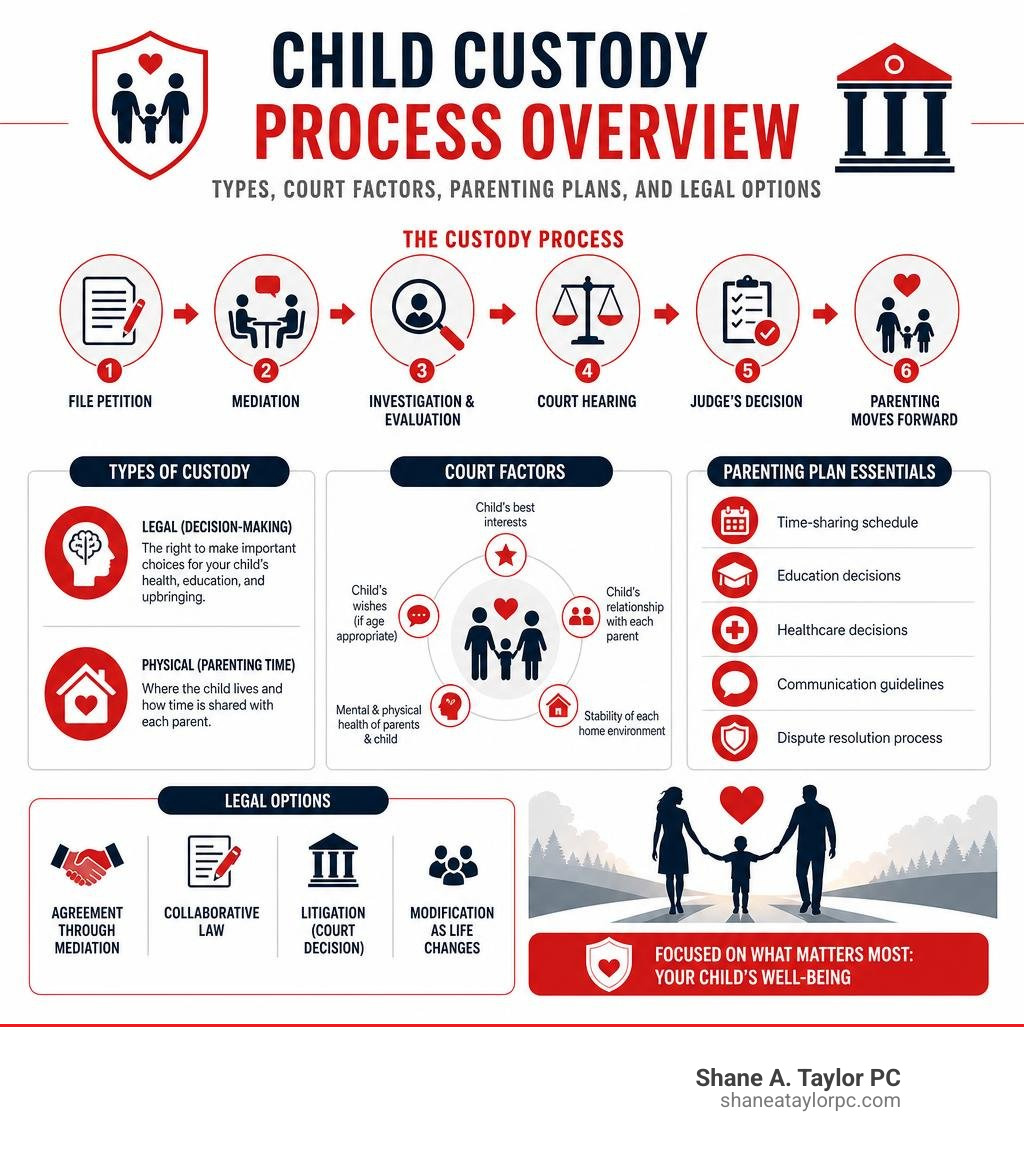
Understanding Child Custody: Legal Decision-Making vs. Parenting Time
To protect your parental rights, you must first understand the legal language used in the courtroom. Many parents use the word “custody” as a blanket term, but the law splits this concept into two distinct categories: decision-making authority (legal custody) and where the child physically lives (physical custody).
| Custody Type | What It Means | Key Decisions & Responsibilities |
|---|---|---|
| Legal Custody | The authority to make long-term, major life decisions for the child. | Education, healthcare, religious upbringing, and elective medical care. |
| Physical Custody | Where the child physically resides on a day-to-day basis. | Daily care, food, shelter, safety, and establishing the primary physical home. |
In Alabama, courts strongly favor arrangements that keep both parents actively involved in their children’s lives. However, how these two types of custody are structured can vary wildly depending on your family’s specific circumstances.
Types of Custody Arrangements
When judges or lawyers discuss custody structures, they generally refer to four primary arrangements:
- Joint Legal Custody: Both parents share the right and responsibility to make major decisions. Neither parent can unilaterally enroll the child in a new school or schedule elective surgery without consulting the other. If parents reach an impasse, the court may designate one parent as the final decision-maker on specific issues.
- Sole Legal Custody: One parent has the exclusive legal right to make major decisions. The other parent may still have visitation, but they do not have a legal say in long-term choices.
- Joint Physical Custody: The child spends significant, split time living with both parents. This does not always mean a perfect 50/50 split, but it is structured to ensure frequent and continuing contact with both households.
- Sole Physical Custody: The child lives primarily with one parent (the custodial parent), while the other parent (the non-custodial parent) receives defined parenting time or visitation rights.
To dive deeper into how these splits work in real-world scenarios, read our detailed guide on Who Gets Custody?.
How Courts Determine the Best Interest of the Child
If you and your co-parent cannot agree on a custody arrangement, a family court judge will make the decision for you. In Alabama, the absolute guiding light for any custody ruling is the “best interest of the child” standard.
When evaluating what is truly in a child’s best interest, judges look at several critical factors:
- The child’s safety and well-being: This is always the court’s primary concern.
- The emotional bond: The depth of the relationship between the child and each parent.
- Stability of the home environment: Which parent can provide a consistent routine, stable housing, and reliable care.
- Past parenting roles: Who has historically handled the daily duties of doctor visits, homework, and bedtime routines.
- The child’s preference: In Alabama, there is no hard, specific age limit where a child gets to choose where they live. Instead, the court evaluates a child’s preference on a case-by-case basis, looking closely at their age and maturity level.
Note on child preferences: A judge can—and will—completely disregard a child’s preference if they suspect parental alienation (one parent manipulating the child) or if the child is simply rejecting a parent because that parent enforces household discipline and strong moral values.
For a comprehensive breakdown of how Alabama judges weigh these factors, check out our resource on Demystifying Alabama Child Custody Laws for Loving Parents.
Why You Need Experienced Lawyers for Custody Cases Near Me

Attempting to navigate family court alone is like trying to sail a ship through a storm without a compass. The legal system is governed by strict procedural rules, filing deadlines, and evidentiary standards that can quickly overwhelm even the most organized parent.
An experienced custody attorney does far more than just fill out paperwork. We act as your strategic advocate, protecting your rights and translating your goals into a legally sound case. To learn more about how we approach these cases, visit our Family Law practice page.
Private Custody Lawyers vs. Free Family Court Help Centers
Many court jurisdictions offer free family court help centers. While these centers are excellent community resources, they have strict limitations that you must understand before relying on them:
- Scope of Help: Help center staff (including paralegals and court clerks) can explain the legal process and help you fill out standard forms. However, only licensed attorneys on staff can give actual legal advice.
- No Court Representation: Help center staff cannot represent you in front of a judge, file paperwork on your behalf, or negotiate with your co-parent’s attorney. If your case is contested, you will still be standing alone in the courtroom.
- Availability: Most of these centers operate on a strict first-come, first-served basis, leading to long wait times and limited individual attention.
If your custody case is uncontested and you simply need help formatting your agreed-upon terms, a help center might suffice. But if you are facing a high-conflict dispute, allegations of unfitness, or a disagreement over parenting time, hiring a private custody lawyer is essential to protect your relationship with your child.
Key Factors That Make a Parent Unfit for Custody
In highly contentious cases, one parent may argue that the other is “unfit” to have custody. To legally establish parental unfitness, the court requires clear, documented evidence showing that a parent’s behavior poses a direct risk to the child’s physical, mental, or emotional safety.
The primary factors that can lead to a finding of unfitness include:
- Substance Abuse: Active drug or alcohol addiction that impairs the parent’s ability to supervise and care for the child safely.
- Domestic Violence: A history of physical abuse or threats directed at the child, the co-parent, or other household members.
- Severe Neglect: Failing to provide basic necessities, such as adequate food, shelter, clothing, medical care, or supervision.
- Parental Alienation: Systematically destroying the child’s relationship with the other parent through manipulation, lies, or withholding contact.
- Severe, Untreated Mental Health Issues: If a parent’s mental health condition directly compromises their ability to provide safe, stable care.
Creating a Workable Parenting Plan Without Court Intervention

You do not have to let a judge decide your family’s future. In fact, negotiating a custody and visitation agreement outside of court gives you significantly more control over the outcome. It also spares your children from the emotional trauma of a courtroom battle.
If you and your co-parent can reach an agreement, we can draft a formal parenting plan and submit it to the court as an uncontested filing. Once approved by a judge, this plan becomes a legally binding court order.
If you are navigating this process as an unmarried parent, your legal starting line may look slightly different. Read our guide on Family Lawyer in Mobile AL: Your Legal Rights as Unmarried Parents to understand your rights.
What to Include in a Comprehensive Parenting Plan
A generic, template parenting plan often leads to future litigation because it fails to address the realistic, daily logistics of your life. A truly effective parenting plan should leave no room for ambiguity.
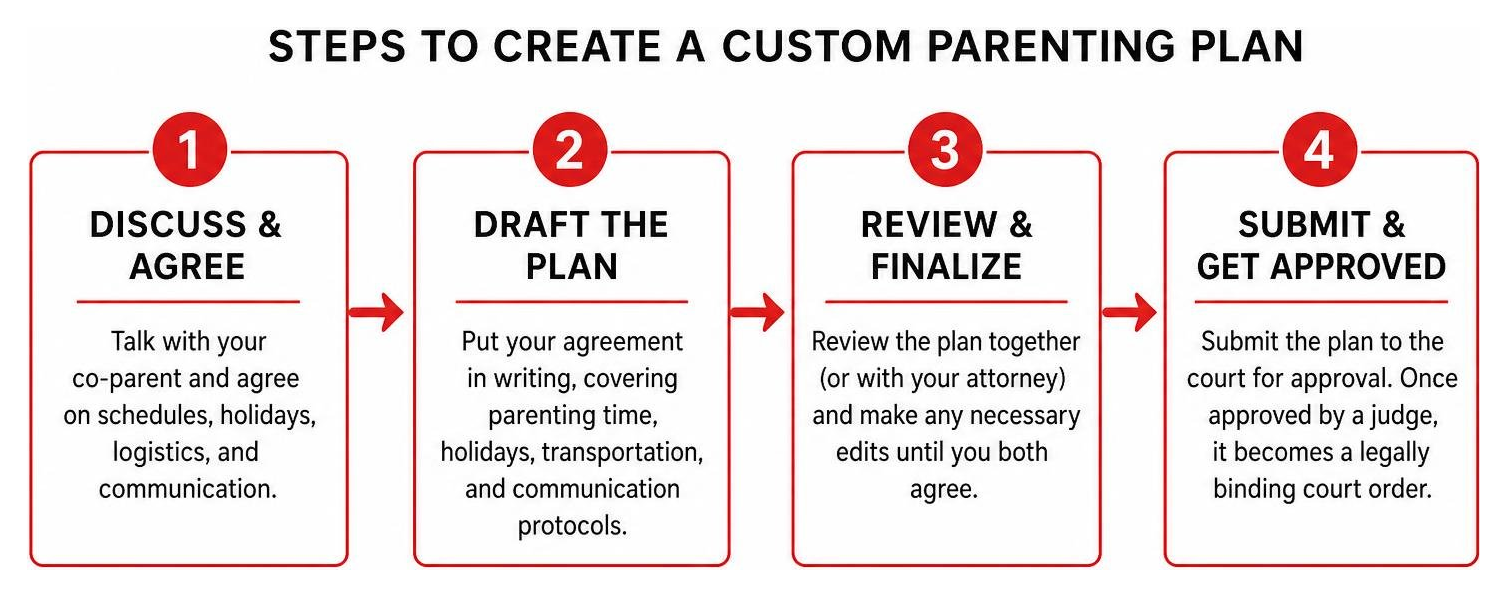
A comprehensive parenting plan must include:
- A Detailed Parenting Time Schedule: Specify exactly when the child is with each parent, including standard weekly routines, weekend swaps, and weekday visits.
- A Holiday and Vacation Rotation: Detail how major holidays, school breaks, and birthdays will be split or alternated each year.
- Transportation Logistics: Outline who handles drop-offs and pick-ups, where the exchanges take place, and how travel costs are shared.
- Communication Protocols: Establish how parents will communicate (e.g., via specialized co-parenting apps) and how often the non-residential parent can call or FaceTime the child.
- Shift-Worker Accommodations: Standard “week-on, week-off” schedules fail shift workers like nurses, first responders, and manufacturing staff. Custom plans should include self-adjusting frameworks, shift-swap protocols, and “right of first refusal” clauses (allowing the other parent to care for the child before hiring a babysitter).
Modifying Custody Orders and Handling Parental Relocation
Life changes, and the custody order that worked for your family three years ago might not work today. In Alabama, you can petition the court to modify an existing custody order, but you must prove that a substantial, material change in circumstances has occurred since the original order was issued.
Common triggers for a custody modification include:
- A parent’s work schedule changing significantly.
- The child’s educational or medical needs evolving.
- A parent relocating a significant distance away.
- The current living environment becoming unstable or unsafe.
Parental Relocation: If a parent wants to relocate with the child, they must comply with strict legal notice requirements. In Alabama, you must formally notify the other parent of your intent to move. If the other parent objects, you must secure court approval before relocating. Moving a child without following these statutory steps can result in a judge ordering the immediate return of the child and potentially stripping you of your custody rights.
Navigating the Search for Legal Representation
When searching for the right attorney to handle your custody case, you need someone who balances aggressive courtroom advocacy with deep empathy for what your family is experiencing.
What to Look for in Lawyers for Custody Cases Near Me
As you evaluate your options, look for these key indicators of a highly qualified custody lawyer:
- Deep Local Court Knowledge: Every county court and individual judge has unique “standard visitation orders” and procedural preferences. An attorney who regularly practices in your local court will know how to tailor your strategy to align with the specific expectations of the judge presiding over your case.
- A Focus on Amicable Resolution (But Ready for Trial): Your lawyer should prioritize low-conflict, child-centered negotiations to save you time and stress. However, they must also be a seasoned litigator who is fully prepared to fight for your rights in court if negotiations fail.
- Clear Communication and Responsiveness: You should never have to wonder about the status of your case. Choose a firm that returns calls promptly, keeps you informed of every update, and explains complex legal options in simple, plain English.
To help you narrow down your search, review our guide on What to Look for in a Good Divorce Attorney.
Questions to Ask During Your Initial Consultation
Most family law firms offer an initial consultation. This is your opportunity to interview the attorney and ensure they are the right fit for your case.
Bring these questions to your meeting:
- How much of your practice is dedicated specifically to child custody and family law?
- Are you familiar with the local judges and court systems in our county? (You can check local directories like the Best Family Lawyers in Mobile County, AL to verify local presence).
- What is your primary strategy for my case based on the details I’ve shared?
- How does your billing structure work, and what are the estimated costs for a case like mine?
- Who will be my primary point of contact throughout this process?
Understanding the Costs of Hiring a Child Custody Attorney
The financial cost of a custody case depends heavily on its complexity and whether the parents can reach an agreement outside of court.
- Hourly Rates vs. Retainers: Most family law attorneys charge an hourly rate. You will pay an upfront deposit (a retainer fee), and the attorney’s hourly fees will be deducted from that retainer as they work on your case.
- Flat-Fee Models: Some attorneys offer flat-fee billing for uncontested custody cases or specific services (like drafting a parenting plan). This provides predictability and reduces billing anxiety.
- Litigation Costs: If your case goes to a contested trial, costs will rise due to court filing fees, deposition transcripts, and the potential need for expert witnesses or custody evaluators.
Frequently Asked Questions About Child Custody
Can a parent withhold parenting time if child support is unpaid?
No. Under the law, child support and parenting time (visitation) are treated as two entirely separate issues.
Even if a co-parent is severely behind on child support, you cannot legally withhold their court-ordered parenting time as a penalty. Doing so violates a court order and can put you in contempt of court, which could severely damage your own custody standing. If your co-parent is not paying support, you must pursue legal enforcement through the proper court channels while continuing to honor the visitation schedule.
How do child custody laws differ by state?
Child custody laws are strictly state-specific. While almost every state utilizes the “best interest of the child” standard, the legal definitions, statutory factors, and procedural rules vary dramatically.
For example, what you read online about Florida’s timesharing statutes or Arizona’s legal decision-making laws does not apply to a case filed in Alabama. Alabama has its own specific guidelines regarding joint custody presumptions, relocation notices, and child support calculations. This is why it is absolutely vital to work with an attorney licensed in your state. You can find qualified local professionals through resources like the Best Family Lawyers in Alabama directory.
How does child support tie into physical custody and parenting time?
Child support calculations are directly linked to physical custody percentages. In Alabama, child support is calculated using an income-shares model that considers both parents’ gross incomes, health insurance costs, and childcare expenses.
However, the physical custody arrangement plays a major role:
- In sole physical custody arrangements, the non-custodial parent typically pays child support to the custodial parent to help cover the child’s daily living expenses.
- In equal joint physical custody arrangements, child support is still calculated to ensure the child enjoys a similar standard of living in both households. Typically, the parent with the higher income will pay a adjusted amount to the parent with the lower income to balance this out.
Conclusion
Navigating a child custody dispute is incredibly stressful, but you do not have to carry this burden alone. By understanding your rights, focusing on a structured parenting plan, and choosing the right legal advocate, you can protect your child’s well-being and secure your role in their future.
At Shane A. Taylor PC, we provide compassionate, client-focused representation to families throughout Mobile, Alabama. We understand the emotional toll of custody battles, and we are committed to delivering the professional, responsive service you need to find a lasting resolution.
Let us help you protect what matters most. Contact us today to schedule your consultation through our Family Law Services page.