


What to Do When You’re Facing Assault or Battery Charges
Finding an assault and battery attorney near me is one of the most important steps you can take after being accused or arrested — and time matters more than most people realize.
Here’s what you need to know right away:
- Assault is a threat or act that causes someone to fear imminent harm — no physical contact required
- Battery is actual unwanted physical contact, even if it causes no serious injury
- Both can be charged as misdemeanors or felonies depending on the circumstances
- The decisions you make in the first 24 to 48 hours after an arrest can shape the entire outcome of your case
- You have the right to remain silent — use it, and ask for an attorney immediately
- The alleged victim cannot drop the charges; only the prosecutor can
These charges carry real consequences: jail time, fines, a permanent criminal record, and ripple effects on your job, your family, and any ongoing custody or divorce proceedings.
This guide walks you through everything — from understanding the charges against you, to building a defense, to finding the right local attorney to fight for you.
I’m Shane A. Taylor, a Mobile, Alabama criminal defense attorney with over a decade of experience as a Birmingham police officer and a background in trial advocacy — experience that gives me a ground-level understanding of exactly how assault and battery cases are built, and how to take them apart. As someone who regularly handles cases as an assault and battery attorney near me for clients across Alabama and Mississippi, I know what’s at stake when your family’s future is on the line.
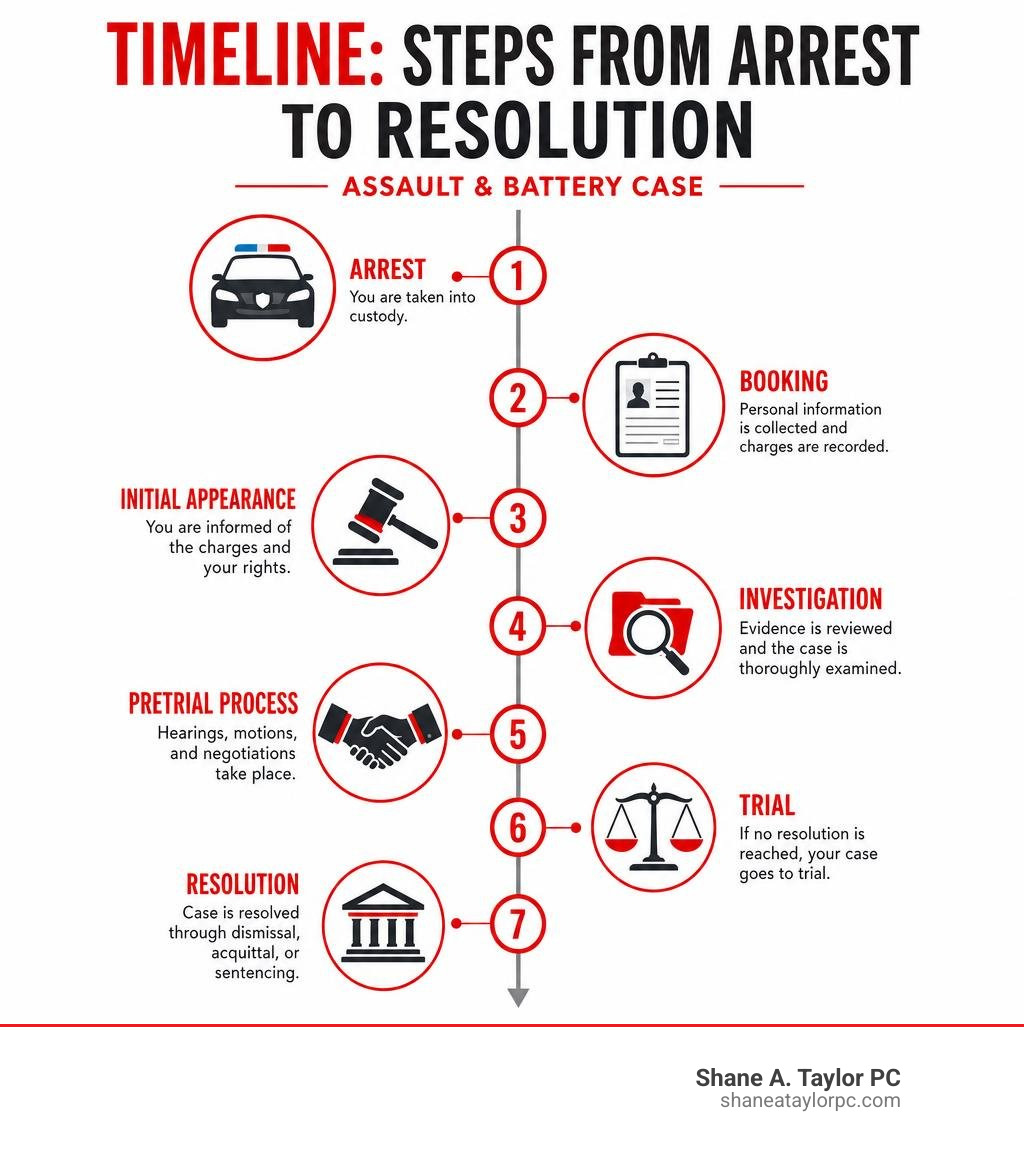
Understanding Assault and Battery: Definitions and Civil vs. Criminal Claims
To mount a strong defense, we must first look at how the law defines these offenses. While everyday language often lumps “assault and battery” together as a single phrase, they are legally distinct concepts.
An assault is fundamentally about the threat of violence. It is an intentional act that puts another person in reasonable apprehension of imminent harmful or offensive contact. No actual physical touch needs to occur. If someone raises a fist and steps toward you aggressively, making you believe you are about to be hit, that is legally classified as an assault.
A battery, on the other hand, is the actual physical contact. It is the willful and unlawful use of force or violence upon another person. This contact does not have to leave a bruise or cause severe pain; even an unwanted shove, spit, or grabbing someone’s clothing against their will can constitute battery.
Criminally, the State of Alabama handles these charges under its own unique code. While some states maintain separate statutes for assault and battery, Alabama’s criminal code merges these concepts under the umbrella of “Assault” (ranging from First to Third Degree), alongside related charges like Menacing or Harassment. Consulting a local criminal defense attorney can help clarify how local police write up these offenses.
It is also vital to understand that a single physical altercation can trigger two entirely separate legal battles: a criminal prosecution and a civil claim.
Criminal Prosecution vs. Civil Claims
A criminal case is initiated by the government (the state or municipality) to punish an individual for violating public laws. The goal is to protect society, and the potential outcomes include jail time, probation, and fines paid to the court. Because the stakes are so high—involving a person’s physical liberty—the standard of proof in criminal court is exceptionally strict. The prosecution must prove your guilt beyond a reasonable doubt.
Conversely, a civil claim is a private lawsuit brought by the alleged victim (the plaintiff) seeking financial compensation for their injuries, medical bills, lost wages, and emotional distress. In civil court, assault and battery are classified as “intentional torts.” Because the defendant is not facing jail time, the standard of proof is much lower: a preponderance of evidence. This means the plaintiff only has to prove that it is “more likely than not” (essentially a 51% certainty) that the incident occurred as described.
Because of these differing standards, a person can be acquitted in a criminal trial but still held liable for civil damages in a subsequent lawsuit. If you are facing a civil suit arising from an altercation, exploring our Civil Defense services is an essential step in protecting your personal assets.
| Feature | Criminal Assault & Battery | Civil Assault & Battery |
|---|---|---|
| Who Brings the Case? | Government Prosecutor | The Alleged Victim (Plaintiff) |
| Standard of Proof | Beyond a Reasonable Doubt | Preponderance of Evidence (More likely than not) |
| Primary Penalty | Jail, Prison, Fines, Probation | Monetary Damages (Compensation) |
| Right to an Attorney | Guaranteed by the Constitution | Must hire privately or represent self |
While we focus heavily on Alabama law, other states handle these classifications differently. For instance, some jurisdictions do not recognize “battery” as a standalone criminal charge, whereas others operate under distinct split statutes. No matter where an incident occurs, securing highly rated local guidance is critical, which is why directories like the Best Criminal Lawyers in Alabama are useful starting points for those seeking representation.
Potential Penalties and Aggravating Factors
When you are accused of a violent crime, the first question on your mind is likely: “Am I going to jail?” The answer depends on whether the state files the charge as a misdemeanor or a felony, and whether any aggravating factors are present. Understanding these distinctions is a core part of Understanding Consequences in Your Criminal Case.
Misdemeanor vs. Felony Charges
Misdemeanors are less severe offenses, but they should never be taken lightly. A conviction for a misdemeanor assault (such as Assault in the Third Degree in Alabama) can still result in up to one year in the county jail and significant fines, along with a permanent mark on your criminal record.
Felonies are reserved for much more serious conduct. A felony conviction can carry multi-year prison sentences in a state penitentiary, massive fines, and the permanent loss of certain civil rights, including your right to own a firearm or vote.
Aggravating Factors
What elevates a simple misdemeanor charge to a major felony? Prosecutors look for specific “aggravating factors” during their initial review:
- Use of a Deadly Weapon: Brandishing or using a firearm, knife, or any object capable of causing death or serious physical injury automatically escalates the severity of the charge.
- Extent of the Injury: If the alleged victim suffers “serious physical injury” (such as broken bones, permanent disfigurement, or injuries requiring surgery) rather than minor cuts or bruises, the charges will skyrocket to a high-level felony.
- Status of the Victim: Committing an assault against a member of a “protected class”—such as a law enforcement officer, first responder, school teacher, healthcare worker, or an elderly person—carries severe penalty enhancements.
- Prior Convictions: If you have a history of violent offenses, Alabama’s Habitual Felony Offender Act can drastically increase your minimum prison sentence.
Facing felony charges with these aggravating factors requires an aggressive, immediate defense. The state will construct a harsh narrative, and your legal team must be prepared to counter it with equal force.
Key Defenses Against Assault and Battery Charges
Being accused of a crime is not the same as being convicted. A skilled defense attorney will analyze the state’s evidence to determine which legal defenses apply to your specific situation.

Some of the most common and effective defenses against assault and battery charges include:
1. Self-Defense and Defense of Others
You have a legal right to defend yourself or another person from imminent physical harm. Under Alabama law, you can use a reasonable and proportionate degree of force to repel an attacker. Alabama also recognizes “Stand Your Ground” laws, meaning you do not have a duty to retreat if you are in a place you have a lawful right to be and you reasonably believe force is necessary to prevent death or serious bodily harm.
To successfully argue self-defense, the force you used must match the threat you faced. For example, you cannot bring a deadly weapon to a simple verbal dispute and claim self-defense. Understanding how these rules are applied in local jurisdictions is essential for building a strong defense.
2. Lack of Intent
For a battery or assault charge to stick, the prosecution must prove you acted with criminal intent or extreme recklessness. If the contact was entirely accidental—such as bumping into someone in a crowded space or tripping and knocking someone over—it does not constitute criminal battery. Proving a lack of intent can dismantle the prosecution’s case before it ever reaches a jury.
3. False Accusations and Mistaken Identity
Heated personal disputes, domestic conflicts, and divorces can unfortunately lead to fabricated allegations. An accuser might lie to gain leverage in a child custody battle or out of anger. In other cases, eyewitnesses may misidentify a suspect in a chaotic environment like a bar fight. A thorough defense investigation—including reviewing surveillance footage, analyzing text messages, and cross-examining witnesses—can expose these falsehoods.
4. Consent
In certain contexts, physical contact is consensual. For example, participants in contact sports like football or martial arts consent to physical contact that would otherwise be considered battery. However, this defense has strict limits; consent does not cover actions that exceed the normal scope of the activity or involve deadly force.
What to Do Immediately After an Arrest or Accusation
If you are accused of assault or arrested by law enforcement, the choices you make in the first few hours are absolutely critical. It is easy to let panic take over, but staying calm and following a structured plan can save your case.
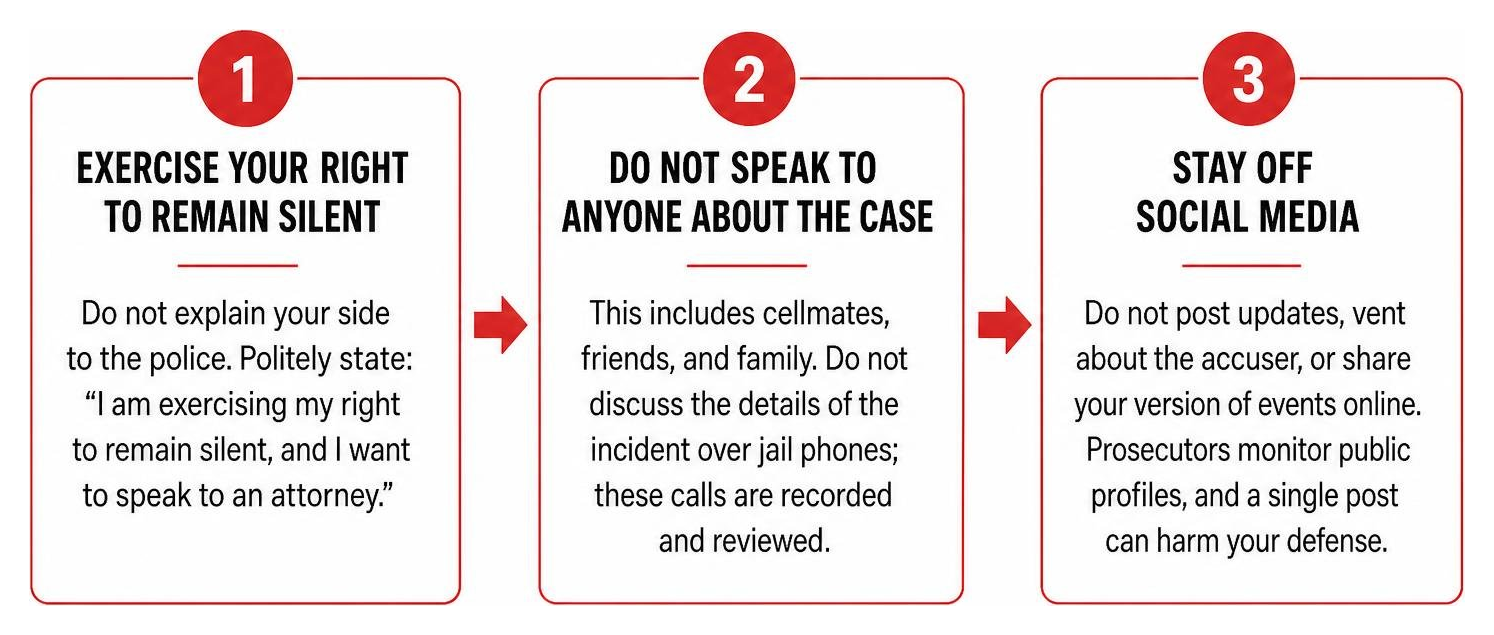
Here is exactly what you should do:
- Exercise Your Right to Remain Silent: This is the golden rule of criminal defense. Do not try to explain your side of the story to the police. Officers are trained to gather evidence to build a case against you, and even seemingly innocent statements can be twisted and used to secure a conviction. Politely but firmly state: “I am exercising my right to remain silent, and I want to speak to an attorney.”
- Do Not Speak to Anyone About the Case: This includes cellmates, friends, and family. Do not discuss the details of the incident over jail phones, as these calls are recorded and routinely reviewed by prosecutors.
- Stay Off Social Media: Do not post updates, vent about the accuser, or share your version of events online. Prosecutors actively monitor public profiles, and a single angry post or photo can destroy your defense.
- Contact an Attorney Immediately: The sooner a defense lawyer is involved, the faster they can begin protecting your rights, securing crucial evidence (like security footage before it is overwritten), and preparing for your initial bond hearing.
To learn more about the timelines and procedures of the local court system, read our guide on What Happens If You Are Charged With a Crime.
Finding the Right Assault and Battery Attorney Near Me
Navigating the criminal justice system alone is highly risky. When searching for an assault and battery attorney near me, you should look for specific qualities that demonstrate the attorney’s ability to handle your case effectively.

- Dedicated Trial Experience: You need a lawyer who is not afraid to take a case to a jury. Some attorneys prefer quick plea deals, even when a trial would yield a better outcome. Look for a firm with a proven track record of fighting in court.
- Local Court Familiarity: Every county and municipality has its own local rules, judges, and prosecutors. An attorney who regularly practices in the Mobile court system knows how local prosecutors negotiate and how local judges rule on key motions.
- Client-Focused Advocacy: Your attorney should treat you like a person, not a case number. They should keep you informed, return your calls, and take the time to understand your personal goals and concerns.
Choosing the right advocate can make all the difference in the final resolution of your charges. If you want to understand how a dedicated legal professional protects your future, read our article on how Criminal Lawyers Can Make a Difference.
Why You Need a Local Assault and Battery Attorney Near Me Immediately
Waiting to hire a lawyer until your first court date is a costly mistake. Early legal intervention opens up critical strategic opportunities:
- Pre-Filing Intervention: In some cases, an attorney can meet with the prosecutor before formal charges are filed. By presenting mitigating evidence or highlighting weaknesses in the police report, your lawyer may convince the state to decline to file charges or to file lower-level misdemeanor charges instead of felonies.
- Plea Bargaining and Charge Reduction: If the state’s evidence is strong, a skilled negotiator can work to reduce your charges to a lesser offense, secure probation instead of active jail time, or arrange for alternative sentencing like anger management classes.
- Protecting Your Liberty: A local attorney can represent you at your bond hearing to ensure you are released from custody as quickly as possible on reasonable terms.
To understand the high standards of proof the state must meet, and why early defense is so vital, read Mobile Criminal Lawyers: Crime Must Be Paid Beyond Reasonable Doubt.
How to Choose the Best Assault and Battery Attorney Near Me
When evaluating potential law firms, check their professional ratings and client feedback. For example, outstanding attorneys are selected to the Super Lawyers list each year—a distinction reserved for only the top 5% of lawyers in each state based on peer recognition and professional achievement.
Furthermore, ensure the firm has deep roots in the local community. You want a firm that understands how criminal charges intersect with other areas of your life, such as your family and employment. To learn more about this holistic approach to defense, read about Family and Criminal Lawyers in Mobile: Protecting Your Rights.
Frequently Asked Questions About Assault and Battery
Can the victim drop the charges in an assault case?
No. This is one of the most common misconceptions in criminal law. Once the police are called and an arrest is made, the case is no longer between the defendant and the alleged victim. The case is officially titled The State of Alabama v. [Your Name].
While the prosecutor will take the victim’s wishes into consideration, the ultimate decision to continue, reduce, or dismiss the charges rests solely with the District Attorney’s office. If the prosecutor believes they have enough independent evidence (such as 911 audio, body camera footage, or medical records) to secure a conviction, they can—and often do—prosecute the case even if the victim refuses to cooperate.
Can assault or battery charges be expunged or dismissed?
Yes, under certain circumstances. If your defense attorney successfully demonstrates that the state’s evidence is weak, or if you agree to a pretrial diversion program, your charges may be dismissed.
In Alabama, if your case is dismissed, resolved through a diversion program, or if you are found “not guilty” at trial, you may be eligible to have the arrest record expunged. Expungement physically removes the arrest from your public record, ensuring it does not show up on background checks for employment or housing. However, if you are convicted of a violent felony, expungement is generally not an option. For a look at how mistaken identity can lead to dismissals, read Right Name, Wrong Man: Mobile Criminal Lawyers on Mistaken Identities.
What are the penalties for felony assault with a deadly weapon in Alabama?
In Alabama, assaulting someone with a deadly weapon is typically prosecuted as Assault in the Second Degree (a Class C felony) or Assault in the First Degree (a Class B felony), depending on the severity of the injury and the intent of the accused.
A Class C felony carries a prison sentence of 1 to 10 years, while a Class B felony carries a prison sentence of 2 to 20 years. If a firearm or other deadly weapon was actively used during the commission of a class-grade felony, Alabama law imposes strict firearm enhancements that mandate minimum prison terms that cannot be suspended by the judge.
Conclusion
Facing assault and battery charges in Mobile, Alabama can feel overwhelming, but you do not have to fight this battle alone. The decisions made in the hours and days following an arrest will impact your freedom, your family, and your career for years to come.
At Shane A. Taylor PC, we provide aggressive, client-focused representation tailored to the unique facts of your case. We understand the local courts, the strategies used by prosecutors, and how to build a powerful defense to protect your rights.
If you or a loved one are facing criminal accusations, do not wait. Contact us for a consultation today, and let us start fighting for your future.