


Find the Best Civil Litigation Attorney Near Me With Confidence
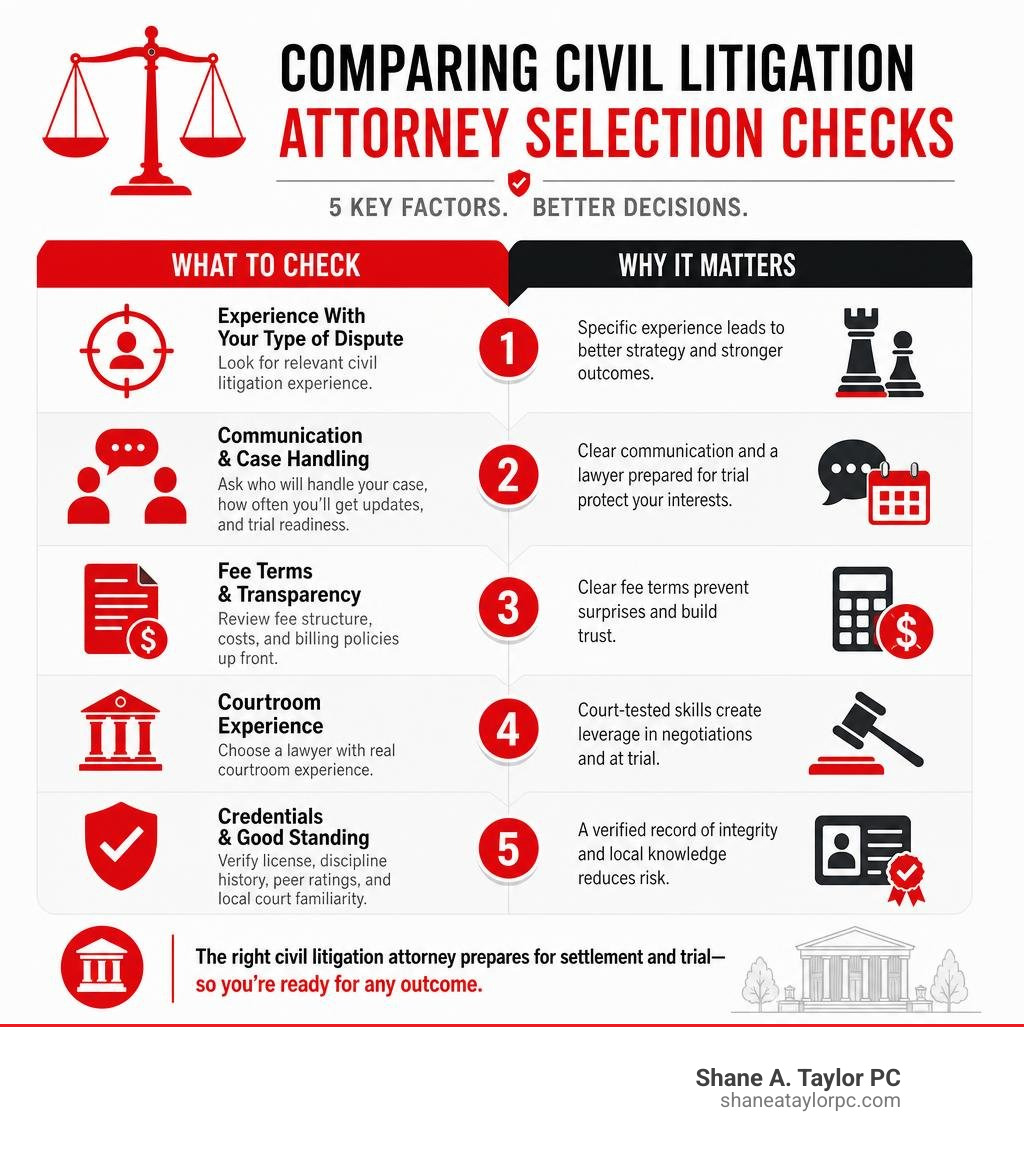
To find the best civil litigation attorney near me, compare lawyers based on the type of dispute, real courtroom experience, clear communication, fee terms, and a verified record of good standing with the state bar. For a divorce, custody-related civil dispute, property conflict, injury claim, or employment issue, the right lawyer should explain your options plainly and prepare for settlement and trial.
Start with these three checks:
- Look for experience with your exact legal problem, not just a broad “litigation” label.
- Ask who will handle your case, how often you will receive updates, and whether the lawyer is ready to try the case if talks fail.
- Verify licenses, discipline history, peer ratings, and local court familiarity before you sign a fee agreement.
Civil litigation is the process for resolving non-criminal disputes. Many cases end through negotiation, mediation, or a settlement, but early preparation matters because deadlines, evidence, and court rules can shape the outcome long before trial.
I am Shane A. Taylor, an attorney with experience practicing in Alabama and Mississippi state and federal courts, backed by a career in law enforcement and trial advocacy. If you are comparing the best civil litigation attorney near me, this guide will help you ask sharper questions and make a more informed choice.
How to Choose the Best Civil Litigation Attorney
Facing a legal dispute can feel overwhelming, whether you are defending your business, trying to protect property, or resolving a major financial disagreement. Finding the right litigator means choosing someone who balances hard-nosed courtroom readiness with smart negotiation tactics.
Not every lawyer who files paperwork loves setting foot inside a courtroom. When choosing counsel, look for verified trial experience and peer recognition. A reliable way to start your search is checking verified local bar association directories, which help you ensure any prospective advocate is licensed, in good standing, and actively practicing in local courts.
How to Screen the Best Civil Litigation Attorney During Consultations
An initial consultation is your opportunity to interview the attorney just as much as they evaluate your claim. Pay attention to how clearly they explain complex statutes and whether they take the time to listen to your goals.
Before committing, read through verified client reviews to gauge how responsive and supportive the firm remains throughout the life of a case.
When you sit down for your case assessment, bring a prepared list of essential questions:
- How often do your cases settle versus going to trial?
- Who in the office will manage day-to-day work on my file?
- What are the strengths, weaknesses, and realistic risks of my position?
- What is the anticipated timeline for the pleadings and discovery stages?
- How do you handle billing for legal research, paralegal assistance, and administrative expenses?
Matching the Best Civil Litigation Attorney to Your Dispute Type
Civil litigation is an umbrella term covering dozens of distinct conflicts. A lawyer who thrives during commercial contract disputes might not handle complex torts or property boundaries every day.
We represent clients across diverse, comprehensive practice areas, ensuring that legal strategies match the unique evidentiary requirements of each claim. For instance:
- Contract and Commercial Disputes: Involve vendor agreements, partnership dissolutions, and breach of fiduciary duties requiring strict interpretation of written terms.
- Tort and Injury Claims: Seeking relief after accidents or negligence involves proving liability and quantifying damages through specialized personal injury claims.
- Property and Real Estate Clashes: Require deep familiarity with deed instruments, zoning regulations, easement rights, and local land use ordinances.
- Civil Rights and Discrimination Matters: Address constitutional violations, regulatory misconduct, or workplace discrimination governed by tight statutory deadlines.
Decoding Peer Ratings, Super Lawyers, and Bar Standing
Peer review credentials provide an objective metric of an attorney’s standing among fellow practitioners and judges:
- Super Lawyers Selection: Only the top 5% of attorneys in each state are named to the Super Lawyers list each year following peer evaluations and independent research.
- Rising Stars Recognition: Reserved for exceptional attorneys who are 40 or younger, or in practice for 10 years or less, limited to just 2.5% of eligible lawyers.
- Martindale-Hubbell AV Preeminent: Represents the highest peer rating for legal ability and ethical standards.
- State Bar Verification: Always verify an attorney’s disciplinary history directly through the state bar portal to confirm they are actively licensed and free from professional sanctions.
Critical Steps in the Civil Litigation Timeline
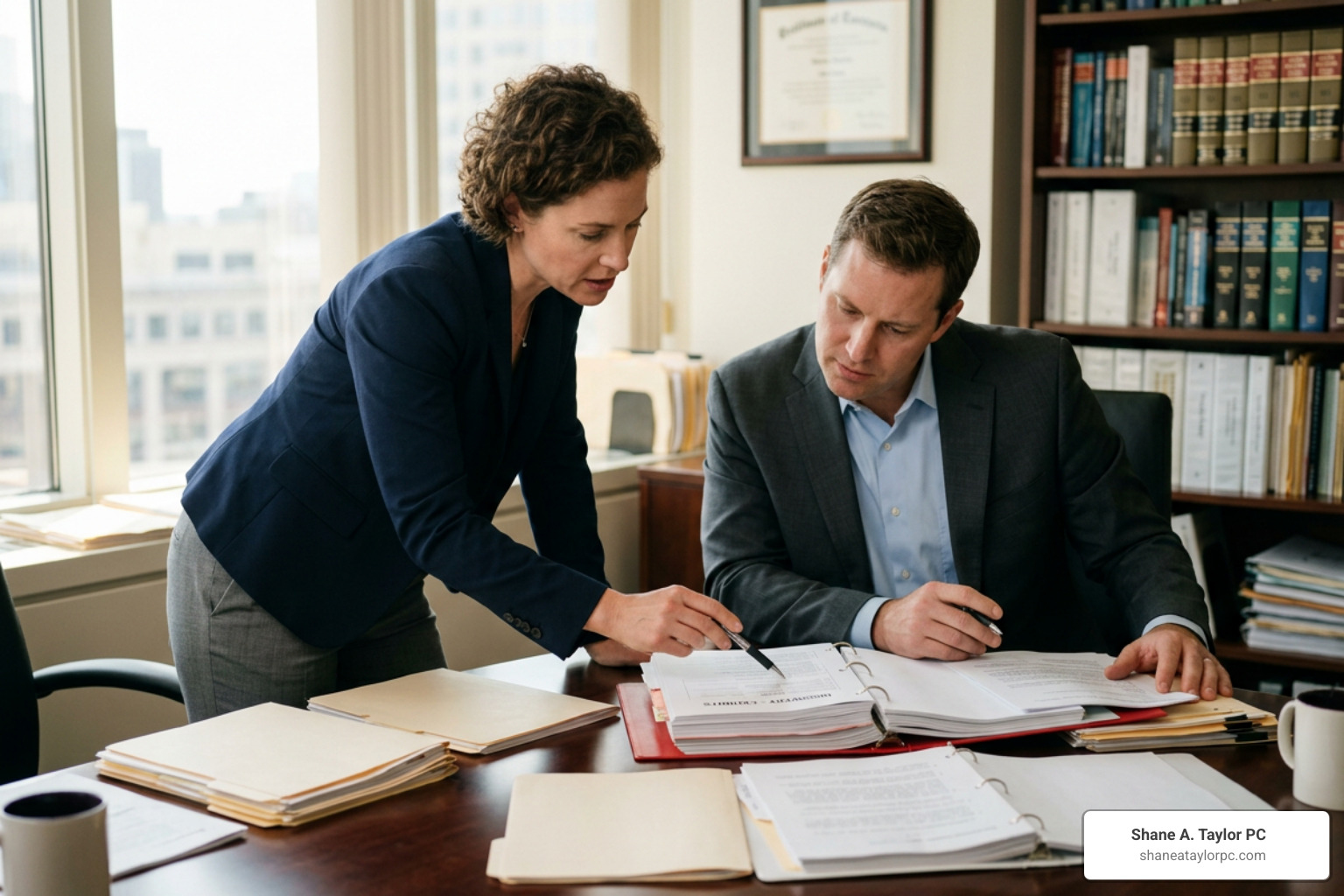
Civil litigation follows structured phases designed to narrow issues, disclose relevant facts, and encourage fair resolution.
Pleadings, Venue Rules, and Local Court Jurisdiction
Every civil action starts with the pleadings. The plaintiff files a formal Complaint outlining allegations and demands for relief, while the defendant receives a Summons specifying a strict deadline (often 20 to 30 days) to respond.
Filing in the correct venue matters. In Alabama, jurisdiction depends on the nature of the claim and amount in controversy:
- Small Claims Court: Minor financial disagreements up to $6,000.
- District Court: Concurrent civil jurisdiction over actions up to $20,000.
- Circuit Court: Handles major general civil actions exceeding $20,000, equitable remedies, and jury trials.
Failing to respond promptly can result in a default judgment, forfeiting the right to present defenses.
Discovery, Evidence Gathering, and Dispositive Motions
Discovery is frequently the longest and most resource-intensive phase of any lawsuit. Parties use formal discovery tools to gather relevant facts:
- Interrogatories: Written questions answered under oath.
- Requests for Production: Compelling inspection of financial records, emails, contracts, and electronic data.
- Depositions: In-person or virtual sworn testimony transcribed by a court reporter.
- Subpoenas: Obtaining evidence or witness statements from third parties.
During or immediately following discovery, litigators often file dispositive motions, such as Motions for Summary Judgment, asking the judge to decide legal issues where facts remain undisputed. Our team brings an established perspective grounded in our documented track record of significant cases.
Alternative Dispute Resolution, Settlement, and Trial Verdicts
The vast majority of civil cases conclude without a full trial verdict. Courts frequently order parties to participate in Alternative Dispute Resolution (ADR):
- Mediation: A neutral third-party mediator helps both sides explore compromise and fashion private settlement terms.
- Arbitration: A private arbitrator or panel hears arguments and issues a binding or non-binding ruling, bypassing traditional court trials.
When settlement efforts fail, the matter proceeds to trial, where counsel conducts jury selection (voir dire), delivers opening remarks, examines witnesses, presents documentary evidence, and makes closing arguments.
Evaluating Attorney Fee Structures and Consultation Terms

Understanding legal fees upfront prevents surprises down the road. During your initial case review, make sure your fee agreement details costs, billing increments, and financial responsibilities.
Hourly Rates, Contingency Fees, and Cost Recovery
Different types of civil matters call for different fee models:
| Fee Structure | Typical Application | Client Financial Responsibility | Key Advantages |
|---|---|---|---|
| Hourly Billing | Business disputes, defense, contract litigation | Pays an agreed rate for all time spent, plus court costs | Direct billing for actual time worked; flexibility |
| Contingency Fee | Personal injury, property loss recovery | Percentage deducted only if compensation is recovered | No upfront attorney fees; aligns financial incentives |
| Flat Fee | Uncontested filings, specific discrete tasks | Predetermined single payment for a defined scope | Predictable legal costs without ongoing hourly billing |
Under the standard “American Rule,” each party typically pays their own attorney’s fees unless an explicit statutory fee-shifting provision or written contract clause allows the prevailing party to recover legal expenses.
Frequently Asked Questions About Hiring a Civil Litigator
What is the difference between civil litigation and criminal litigation?
Criminal litigation involves the state or federal government prosecuting an individual or entity for statutory violations that carry penalties such as imprisonment or criminal fines. The standard of proof is “beyond a reasonable doubt.”
Civil litigation involves private parties (individuals, businesses, or government agencies) resolving non-criminal conflicts. Civil claims require a “preponderance of the evidence” standard—meaning the claim is more likely true than not—and seek financial compensation or equitable relief like injunctions.
How long does a civil lawsuit typically take to resolve?
Simple matters may settle within three to six months through demand letters and early mediation. However, contested circuit or federal court cases involving extensive discovery, expert witness depositions, and motion practice regularly take 12 to 24 months or longer before reaching trial or final disposition.
Can civil litigation disputes be resolved without going to trial?
Yes. Over 90% of filed civil lawsuits resolve before a verdict. Pre-litigation demand packages, structured negotiations, court-ordered mediations, and summary judgment motions frequently lead to resolution without the expense of an extended courtroom trial.
Conclusion
Finding the right advocate means choosing a team with proven courtroom poise, thorough analytical preparation, and an unwavering commitment to your objectives.
At Shane A. Taylor PC, our dedicated legal team provides aggressive, compassionate, and attentive representation. Whether you are seeking recovery or require experienced civil defense representation, we are ready to stand by your side. Reach out to schedule a consultation today to discuss your case and take the next step toward resolving your dispute.